The mausoleum houses the remains of Date Masamune, founder of Sendai and once a potential leader of all of Japan.

As for the mausoleum Zuihōden, the best time to visit is in the morning cool. The night’s mists are dissipating away in the rising sun, and the Buddhist monks in the bordering temple ring gongs and chant, as if coaxing the spirits back into their graves. Their chants travel eerily throughout the cedar forest and the drumbeats answering the gong’s chimes echo through the mausoleum’s hundreds of stone lanterns.
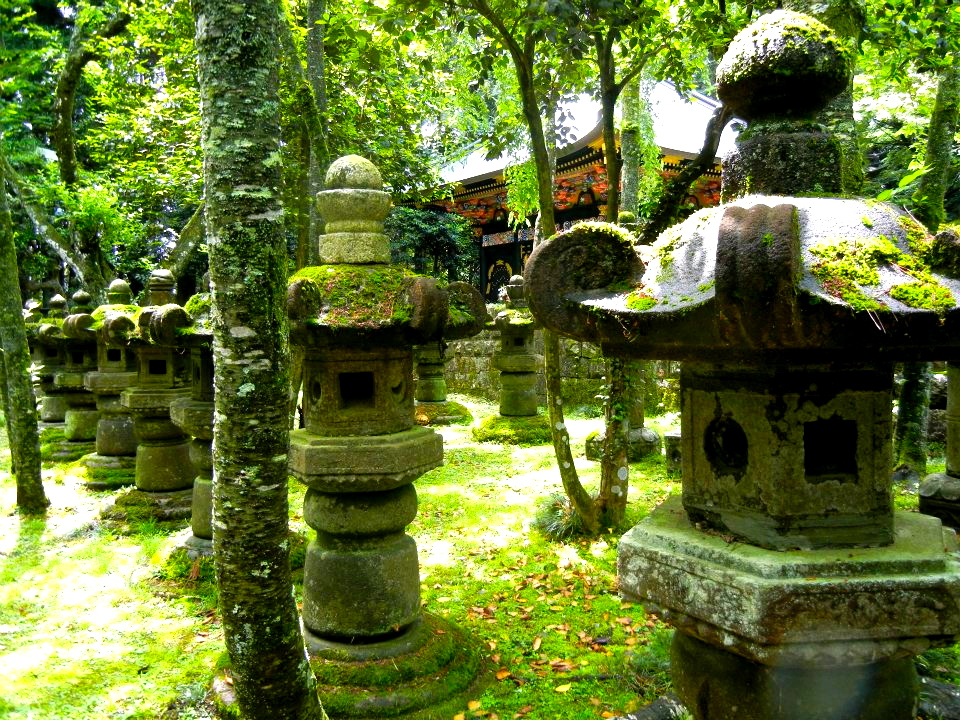
Zuihōden reopened on July 11th, 2011, a couple months after the Tōhoku earthquake that greatly damaged much of Sendai. Tourism in the area is still picking up and there are few foreigners wandering the “City of Trees.” The mausoleum houses the remains of Date Masamune, founder of Sendai and once a potential leader of all of Japan. He was a legendary leader. Known as “the one-eyed dragon,” for his missing eye and unparalleled wisdom, he was single-handedly responsible for propelling Sendai into the prosperous city seen today.
When he died in 1636, he released the instructions for his tomb to be built in the rich style of the Momoyama Period, a style that when placed within the context of death characterizes where death meets life.
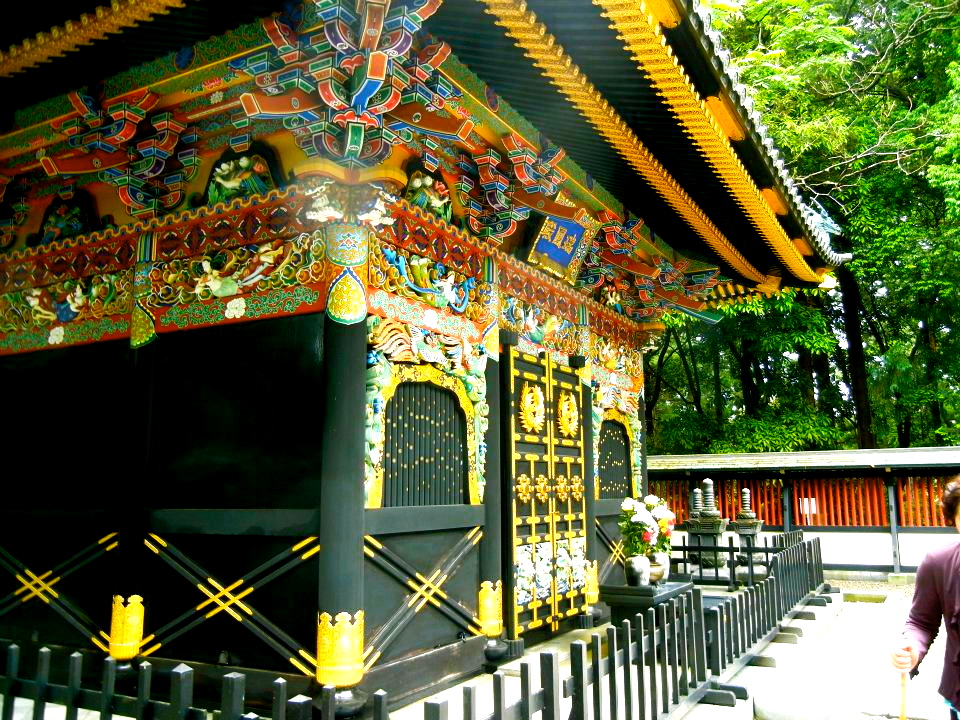
Wandering Zuihōden’s hills to the beats of Buddhist chants, I saw colors of Date Masamune’s tomb representing the delights of life, a pastiche of gold-accented kimono prints. For such a powerful man to choose such a design, surely he saw himself entering a dreamlike heaven, full of happiness and all the delicacies beauty has to offer. Anyone who walks among Zuihōden’s tombs feels that there must be riches and color after death.
I soon learned that the mausoleum had been destroyed in WWII and had been rebuilt as a National Treasure. To imagine the place emblazed in flames – bright blue and pink hues charred into ash, oxidized gold, what a blow. But the destruction of plummeting bombs to the earth had opened the path for study towards the dead ones concealed underground.
The body of a legend had to be studied, and replications of his remains, including authentic hair and bone shards, are on display at Zuihōden. Even I, a near stranger to Date’s story, wanted to know what made him.
I found the reproduction of his skeleton to be surprisingly bird-boned and refined, not like the stout, compact form I had in mind. He shared the grace and strength of the lithe dragons for which he was known. His facial reconstruction revealed that he had dragon-like whiskers, a clever fox-like face. Having seen the intricate rainbow-colored eaves of his tomb, I wondered if the beauty of the outside world in which he lived acted upon his bones to refine them in such a way, or if the bones within him, born with a grace of their own, characterized the beauty of his domain.
For without a doubt, he was as gorgeous as the heavenly tomb that protects him from earthly destruction.