The Gion Festival takes place in Kyoto every year, it’s one of the most famous and largest festivals in Japan.
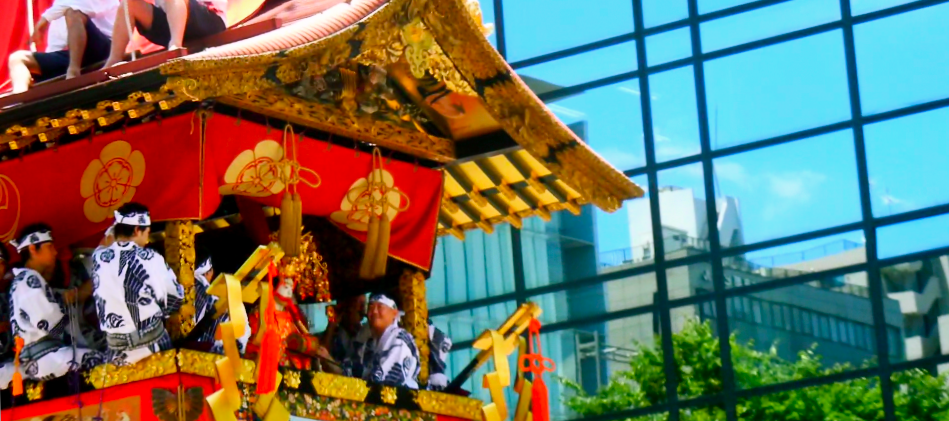
Gion Matsuri is a massive performance: hundreds of floating shrines parade half a kilometer, from Shijo to Karasuma Oike. The yamaboko floats are draped with the most exquisite tapestries in all of Japan, their flanks attended by a fleet of musicians and dancers skilled in ancient ritual. We stand under the shade of umbrellas, a sweating mass under a burning sun, idly evaporating our essences into the heavy air, utterly entranced.
It is haunting, truly, to see the reflection of these ancient shrines, the very ones used and reused year after year, century after century, gliding across the mirrored glass windows of Karasuma Oike’s modern edifices. The crowds block the reflection of the human labor force. There are strands and strands of white-robed men, muscles contracting to the limit against the heft of painted cedar. They must drag nine twelve-ton, twenty-five-meter-high ancient burdens through Kyoto’s city streets.
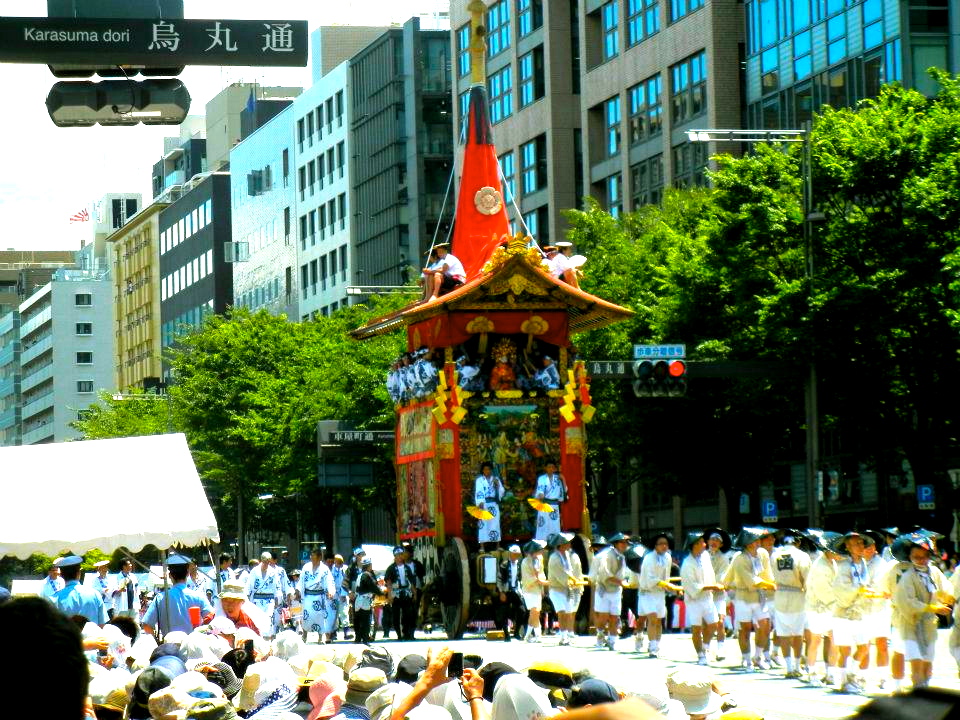
I watch the floats in the sleek glass superimpose themselves upon our eager, sweaty faces as they pass by. One after the other, my eyes, hypnotized by the relentless drumbeat, follow the slow-moving giants until they turn around the corner of the next street, dissipating back into ancient shadow.
What most catches my eye, however, are the smaller yama floats, bearing life-sized, plastic mannequins painted with the faces of emperors and empresses, famous aristocrats, and deities. Amongst their flesh-and-blood retainers, their garish, fixed smiles glint down at us. Here is an attempt to freeze a once contemporary moment.
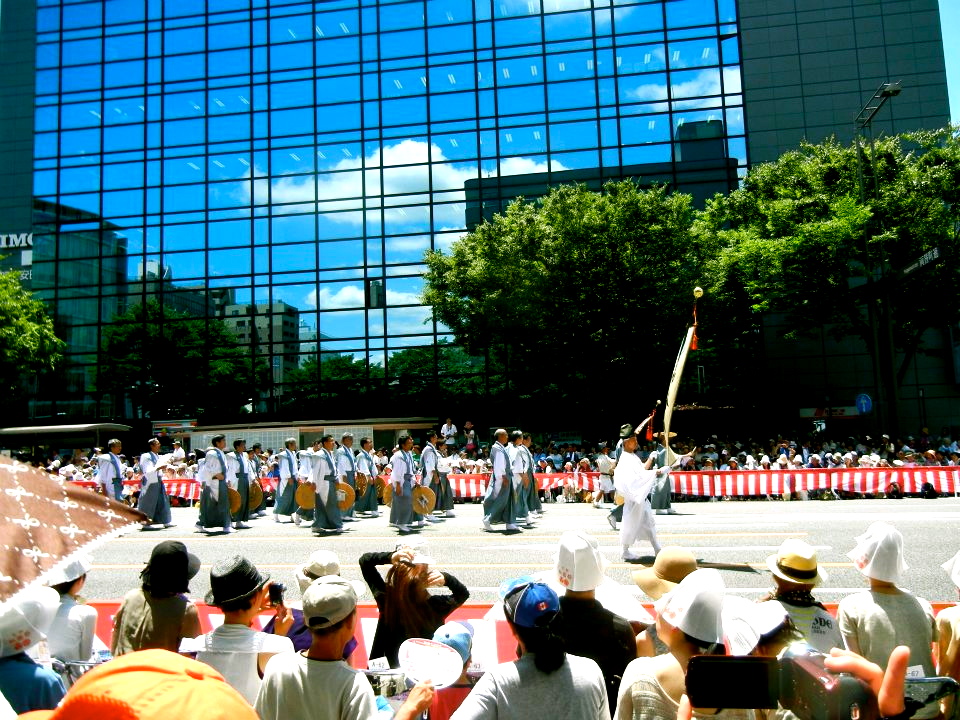
During the Middle Ages, when the festival originated, the Four Horsemen of the Apocalypse did not only scourge the European continent; the festival seeks to ward off pestilence and natural disaster, appeasing the wrath of the gods. Despite Gion Matsuri’s folk and religious roots, the festival evolved over time into a form of entertainment for metropolitan aristocrats. It was an impressive break from courtly monotony. Now, having been stripped of religious meaning over many centuries, it has become pure spectacle for us tourists and plebeians as well.
It used to be about those in power displaying their tastes and wealth. Even Heian women, who were hidden away from sight, could broadcast their refinery based on the color combinations of the sleeves of their twelve-layered robes and how elegantly they draped them outside the procession’s carriages.
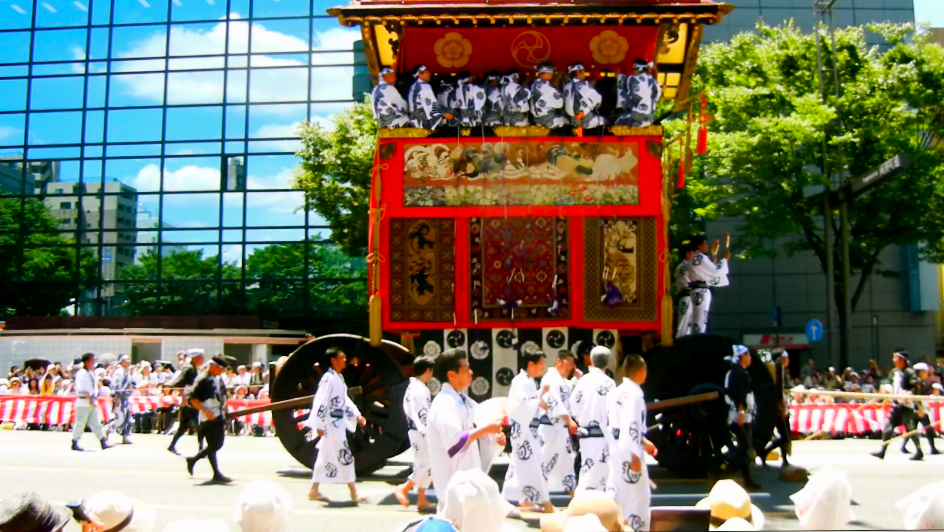
The festive music, gold-embellished wood, bright red halberds piercing the heavenly skies, and tinkling charms do more to ward off boredom than evil spirits. But now power, taste, art, and extravagance no longer belong exclusively to the highest class. In fact, they belong to no one but those smiling plastic mannequins, the models of which are long dead. Though we no longer approve of societies that force us to heave our social betters through the streets in towering floats, we still gather to witness brute manpower drag their plastic renditions in the sweltering heat, enthralled by ancient lyric.