As the train rumbled into Himeji Station, my stomach grumbled and I grimly thought of the weak bowl of soba I had to look forward to.
On a train ride to Himeji City, my friends and I passed through Kobe, a name that immediately precedes the word “beef” in my mind. But as Kobe disappeared in the distance, I was appalled to learn that the best price we could expect for high-grade Kobe beef was ¥5000 per plate. For all I knew, my wagyū dreams would be put off until I returned to Japan as a career woman.
As the train rumbled into Himeji Station, my stomach grumbled and I grimly thought of the weak bowl of soba I had to look forward to. However, my gastronomical needs were in luck; amongst the glitter of the station’s arcade mall, we came across an actual hole-in-the wall, simply entitled ‘Yakiniku,’ or “grilled-meat.” They offered wagyū for ¥1500 a plate, and though a bit sketchy, I had a great feeling about the place.
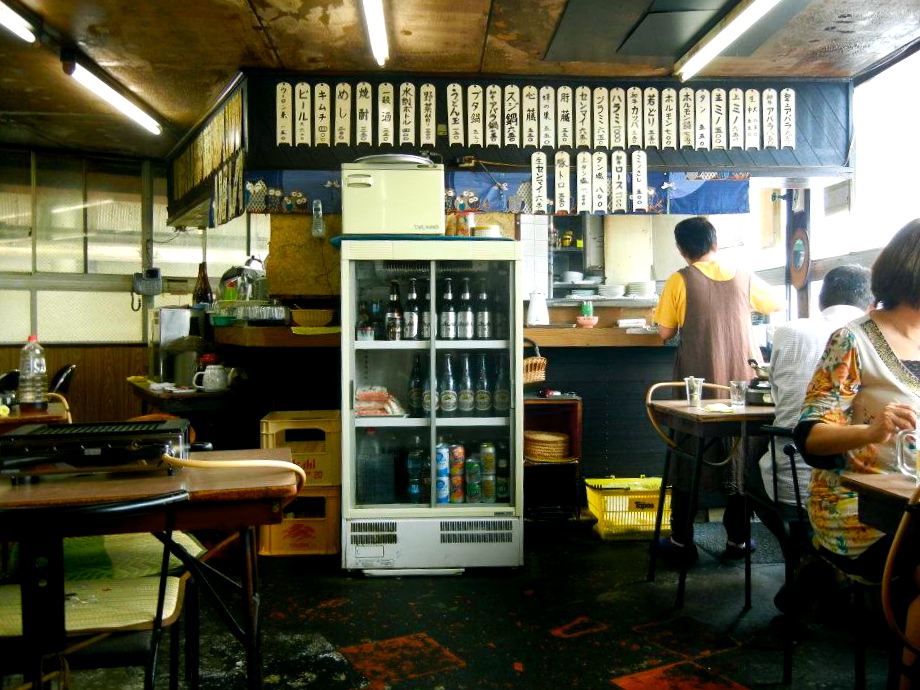
Humming with old people telling jokes, smoking, and dealing mājan tiles, the eatery took me back to the forties. There was nothing shiny about the place; it was all wooden benches and cheap, communal chopsticks. Customers ordered up front off of dusty wooden tablets, painted for posterity with the menu items. A gas pipe ran along the floor and interconnected all the tables to fuel the grills.
Yellow-sleeves rolled up to her elbows, an aproned obaasan serviced the place, padding about in her house slippers to pour teacups, banter, and pop open beer bottles. Her husband, a wizened ojiisan, sat behind the counter and took out pre-cut beef from a cooler, dousing the plates in a savory-sweet marinade with a bamboo ladle. Every now and then, he would take a rest by sipping on some Sapporo and counting the day’s yen.
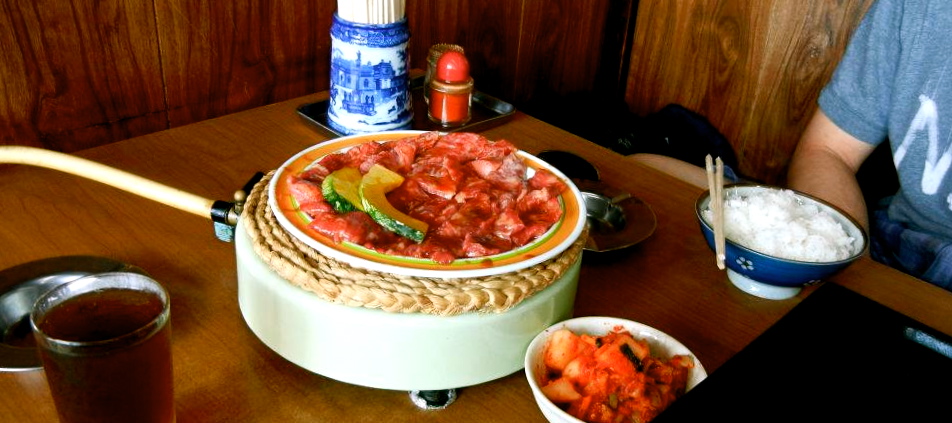
Along with rice bowls, barley tea, and beer, the obaasan brought us cabbage kimchi speckled with red chili pepper flakes, slices of buttery kabocha, or Japanese pumpkin, and, of course, our high-grade beef.
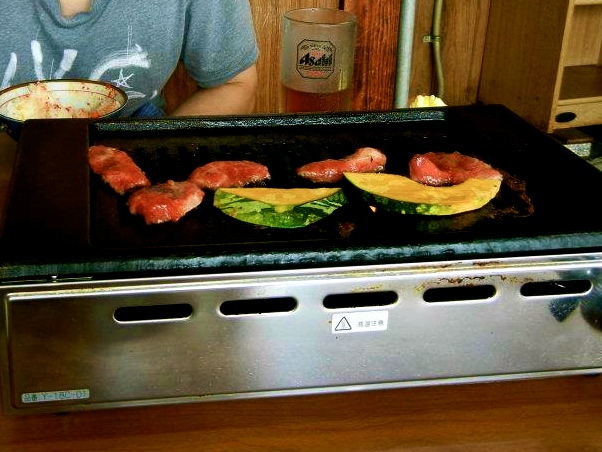
Mouth-watering and about to commence grilling, I regarded my wagyū: thin, succulent cuts of bright-red, intricately fat-marbled beef.
In a matronly way, the obaasan returned to our table and chided us for not placing each food in its proper region on the grill. She took my chopsticks from my hand and expertly grilled the rest of our meats and vegetables for us, portioning them out into our plates and making sure to give the guys a little more to eat with an apologetic smile.
In a strange sense— velvet beef melting in my mouth and beer warming my belly—I felt at home.