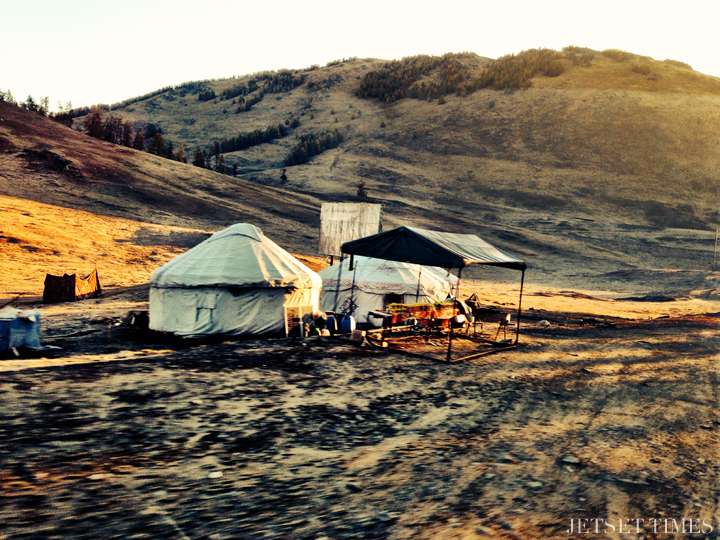
Real nomads in Xinjiang have survived centuries of herding cattle, living in tents.
Even if you won’t be road tripping via camels, here’s a list of must-do’s in the undiscovered region of Xinjiang. It’s awaiting your inquisitive exploration.
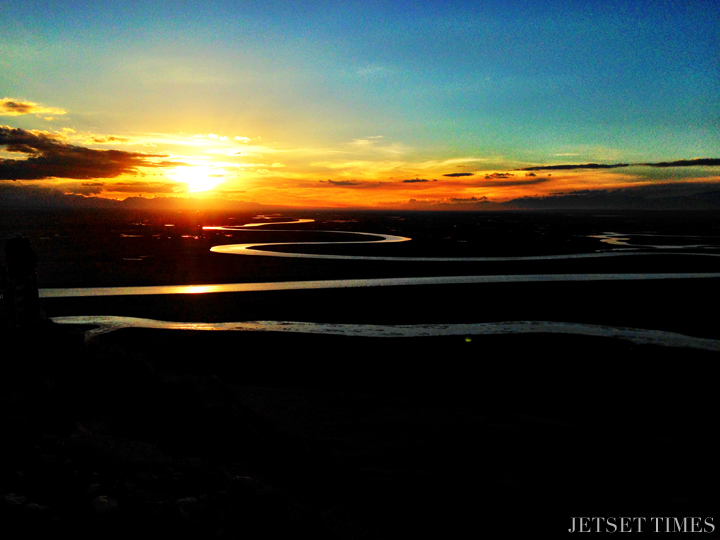
1. Check out the best sunset in the world atop the curving river of Ba Yin Bu Lu Ke and spot 9 reflections of the sun (on a good day)!
Grab your North Face parkas, and head to the mountain top for the most incredible sight. Located on the western part of Xinjiang, Ba Yin Bu Lu Ke is a prairie populated with approximately 10,000 Mongols. The one thing to see inside the National Park is a curving river. Herds of experienced photographers will set up camp at vista point, bearing the cold and wait for hours for an astonishing sunset infused with colors like you’ve never seen before. Nine reflections of the sun will appear on each curve of the river.
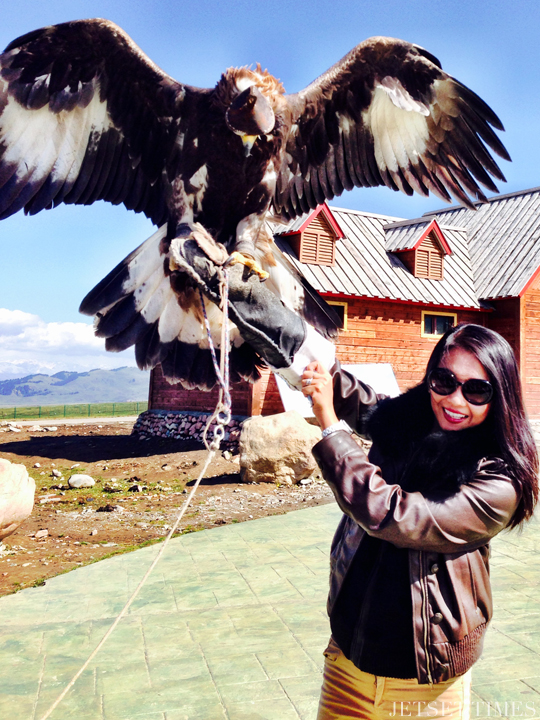
2. Vogue! Strike a pose with a falcon is a desert must.
Falcon tamers are legends in the Chinese desert culture. They are nomads, riding horses, galloping through dusty sands of northwest Xinjiang. When in Rome, do as the Romans do, right? Gotta strike a pose with a falcon.
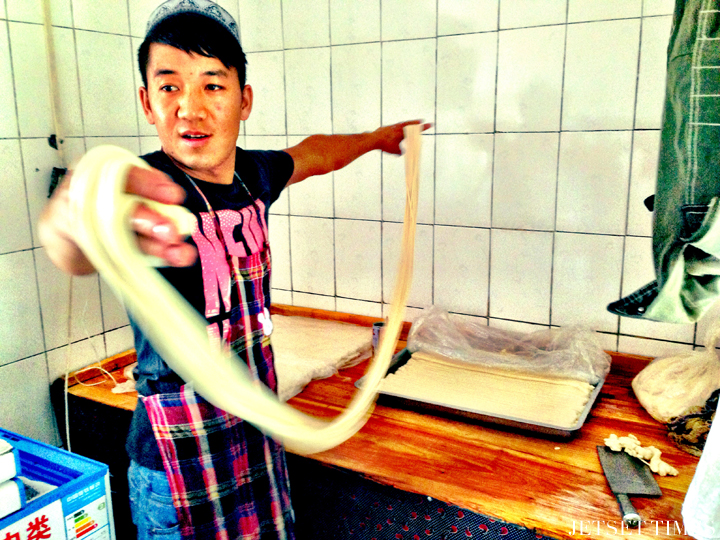
3. Make a stop at a local streetside restaurant to indulge in delicious hand-pulled Kung Fu noodles.
Japanese call it ramen for a reason. Ra (pull) and mian (noodle) in Mandarin literally means hand-pulled. By stretching and folding the dough into strands, the noodles are created into various lengths and thickness. This method was originated in China and you’ve got to stop by a roadside local restaurant for a delish plate of these Kung Fu noodles.
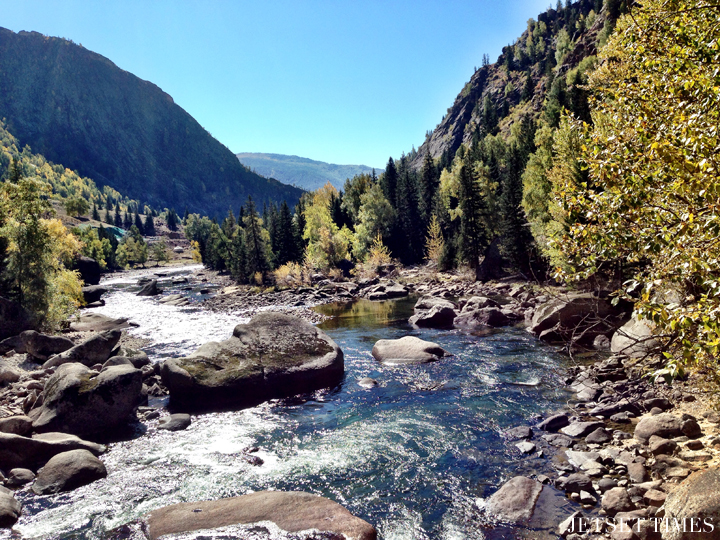
4. California’s got Yosemite, China’s got Keketuohai National Park, where you need to spend a glorious day.
Keketuohai’s land was used by the nomadic Kazakh people for centuries. They live in yurt (Mongolian’s version of a tent – a moveable, circular dwelling that takes 30 minutes to 3 hours to set up) with sheep and cattle. Every spring, they pack up the family and travel to greener regions then return to Keketuohai during winter months. Hike the trails and picnic along scenic rivers. If you pay a small fee, Kazakh women will allow you to peek inside their private yurts.
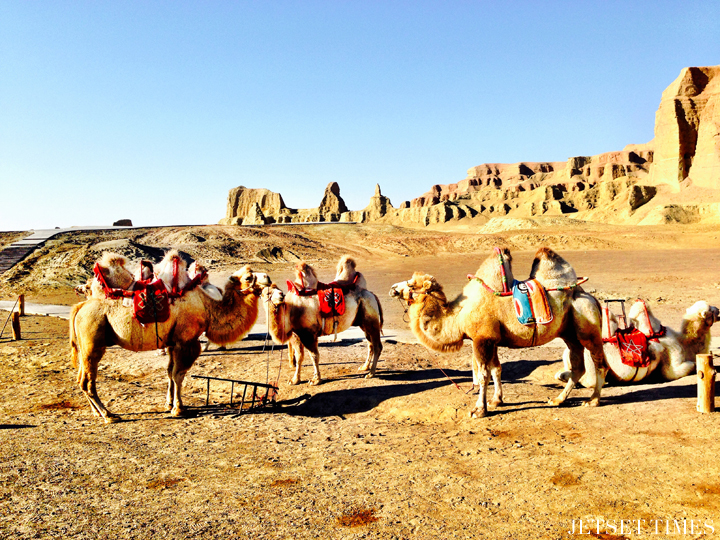
5. STOP…and hear the howling wind in Ghost Town. Roooooar!!
Located 100 kilometers from the city of Karamay is Ghost Town. When the wind blows and storm thrashes, huge noises of howling ghosts roar through peculiar landforms in the middle of desert. Director Ang Lee knew how special this place was, and filmed the start of a love story between Jen Yu and Dark Cloud (Crouching Tiger Hidden Dragon) in this very town.
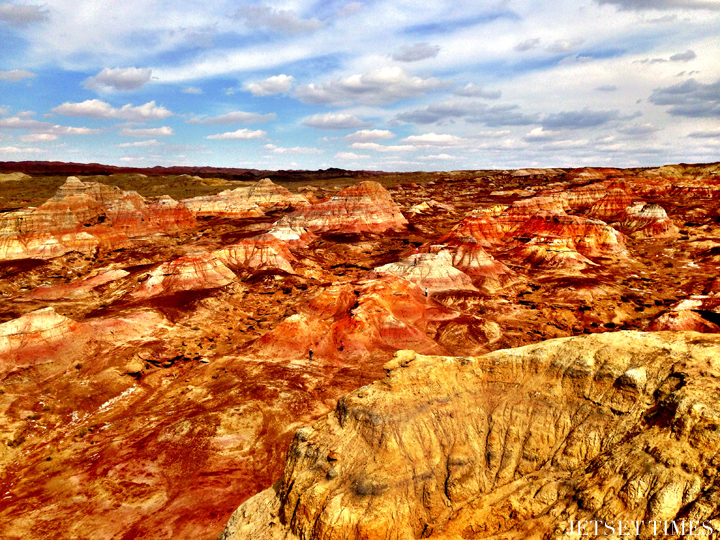
6. Although it’s not a real city, jeep through the red rocks of Five Color City.
Days of roadtripping and you’ll encountered Five Colored City located on the other side of the desert. A spectacular territory of land formed by layers of red rocks. From dusk to evening, massive grounds of rocks naturally illuminate. This is simply nature’s way of letting you know what paradise truly looks like.
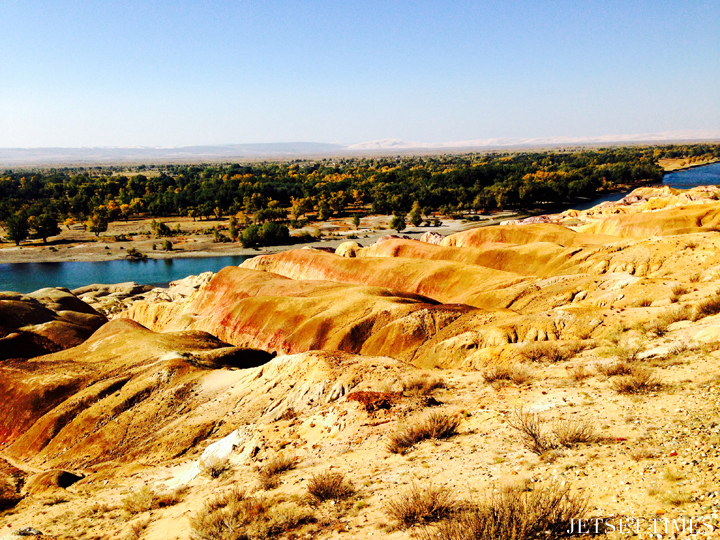
7. While we’re on the subject of Five Colors, also put Five Color Beach on the top of your list.
Aka: Wucaitan, check out wind-worn rock formations ranging from 5-25 meters in height, all situated along the river that lead to the Arctic Ocean.
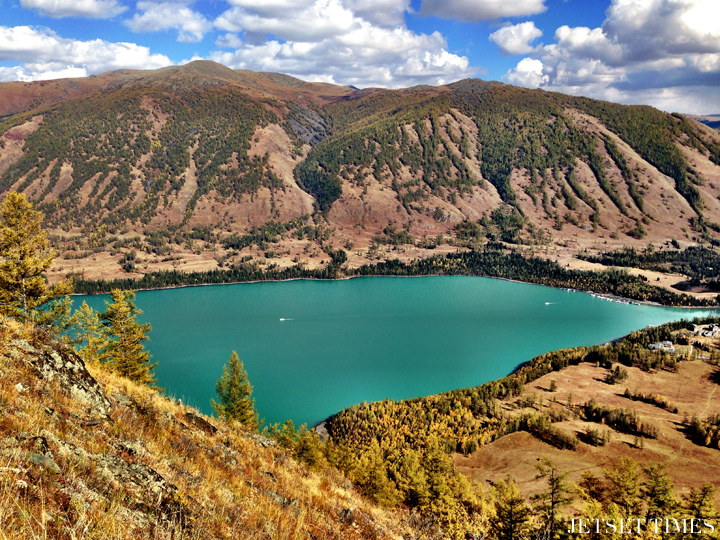
8. Home to the mythical Kanas Lake monster, Kanas National Park is worth the few days away from desert life.
Supposedly, pictures of the monster is at the top of a Fish-Watching Pavilion, which you can reach by hiking 1,000 steps (as a person who despises hiking, I did 800+ steps then no longer felt the need to uncover the lake monster). A professor from Xinjiang University decided to verify the the legend of Kanas Lake Monster with his students. In 1985, they concluded that 50 fish of an unidentified species weight 4 tons and 10-14 meters long exist in the lake. Reaching Kanas Park is a trip and half, as the park is large with lots to see. You’ll need to stay overnight in a hotel located near mountainous regions.
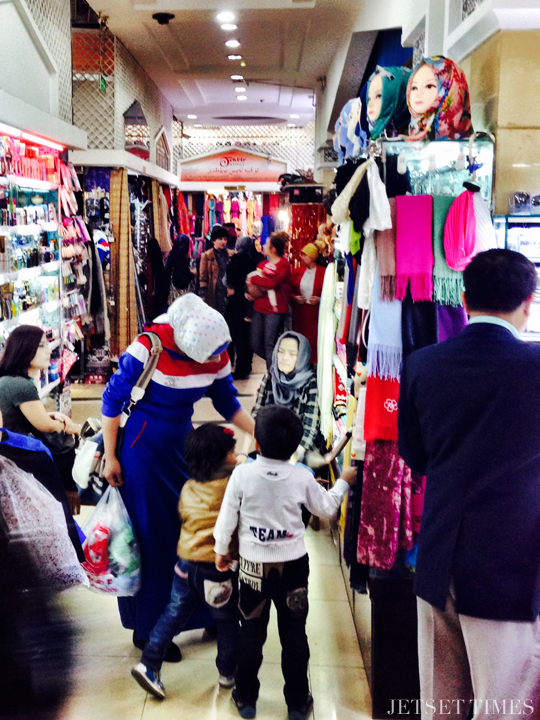
9. Shop ’til you drop in Urumqi, street market-style! Note: Bargain your butts off!
As a major hub of the Silk Road during China’s Tang Dynasty, Urumqi is now a city just as multicultural as it is multiethnic. You can see Chinese, Russians, Arabs, Mongols, Tibetans, and even Koreans in this metropolitan. As a result, shopping in Urumqi is colorful with boutiques selling scarfs, fur coats, hats in styles and trends you won’t discover in other parts of China. With a heavy influence of the Muslim culture, street market shopping in Urumqi is as authentic as it gets, so take advantage of this local experience and make sure to bargain!
10. If you’re fearless about experimenting with local foods, then eat lots and lots of mutton.
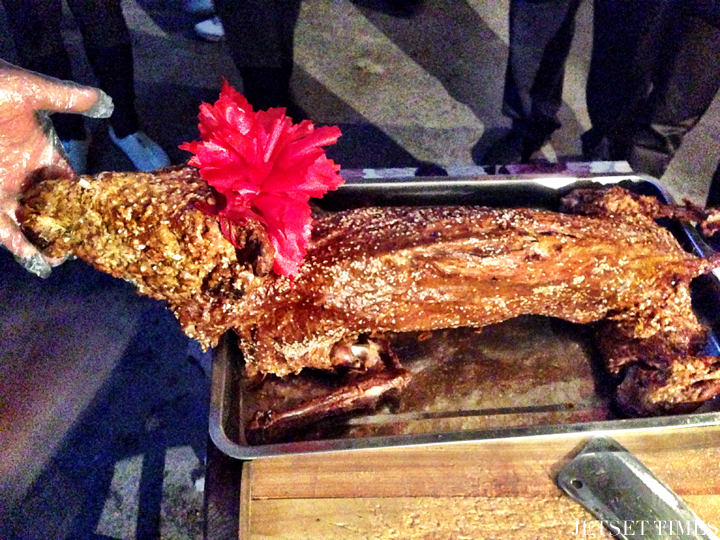
Since Xinjiang has a huge Islamic population which forbids eating pork and donkey; beef and mutton, in turn, are crowd favorites. In this region, nomads had to eat meat as their main source of fuel, so you can easily find mutton prepared in all sorts of ways. But the most common cooking method is barbecued above charcoal in whole, then an Islamic prayer is performed before breaking meat into smaller pieces.