
The combination of the Terracotta Warriors and the map of acquired Chinese land struck me, and, for the first time, I felt what Chinese people feel towards their beloved country: pride.
At the mention of Xi’an, we would recall that Xi’an is the ancient Chinese capital where the famous Terracotta Warriors were buried. My father said, if I was interested in learning more about my Motherland and its history, I should go to Xi’an. As a result, I assembled a group of friends and we hopped onto a 13-hour train ride from Beijing to Xi’an for 265RMB (about $30USD) during Qingming Jie, Chinese “tomb-sweeping” festival celebrated in March.
On the outside, the train looked like one of those big and ominous ones from Bollywood films, eating up passengers and spitting them out at random stops (where they would then break out in song and dance.) Inside, a narrow passage connected the compartments, which ranged from cheap sitting-only compartments, average six-bunked compartments, and more expensive (and comfortable) four-bunked compartments. Upon entering, my left side reeked of remnants from the stainless steel squatting toilet and of the hundreds of cigarettes smoked during the day. And on my right side, the smell of shoes, socks, and sweat hit me full-force but I willed myself to swallow my high-maintenance tendencies and move forward to my assigned bunk.
Fifteen minutes before arrival, we dragged ourselves off our bunks, quickly brushed our teeth, and jumped off the train. The first item on our schedule was reaching our hostel. Now, this was going to be my first time staying in a hostel, so I did not know what to expect (and when you do not know what to expect, you expect nothing or the worst to avoid dashing your hopes.) While we were waiting to be picked up by someone from the hostel, we chatted with a young British couple, who were on a six-month adventure through Asia. We decided to team up with them to explore Xi’an. On our ride to the Han Tang Hostel, I closed my eyes and pictured a tiny room with a dirty bathroom cramped with too many people. I was completely mind-blown by the hipster-inspired interior design, the spaciousness of the rooms, and the smell of new furniture. While we took turns showering, some of us asked for directions, transportation, and recommendations around the area. When we were tidied up, we left the hostel in search for food. We settled at a Xinjiang (autonomous province in the western region of China) restaurant where we ordered jiaozi (dumplings) and took them to-go in almost-melting plastic bags. (I do not know how we decided to order dumplings at a Xinjiang restaurant because Xinjiang is known for a lot of good food but dumplings are not one of those foods.) Jiaozi in hand, we searched for the bus that would take us directly to the Terracotta Warriors Mausoleum, asking for directions every 200 meters. We eventually made it onto the bus, and after a short nap, we arrived refreshed.
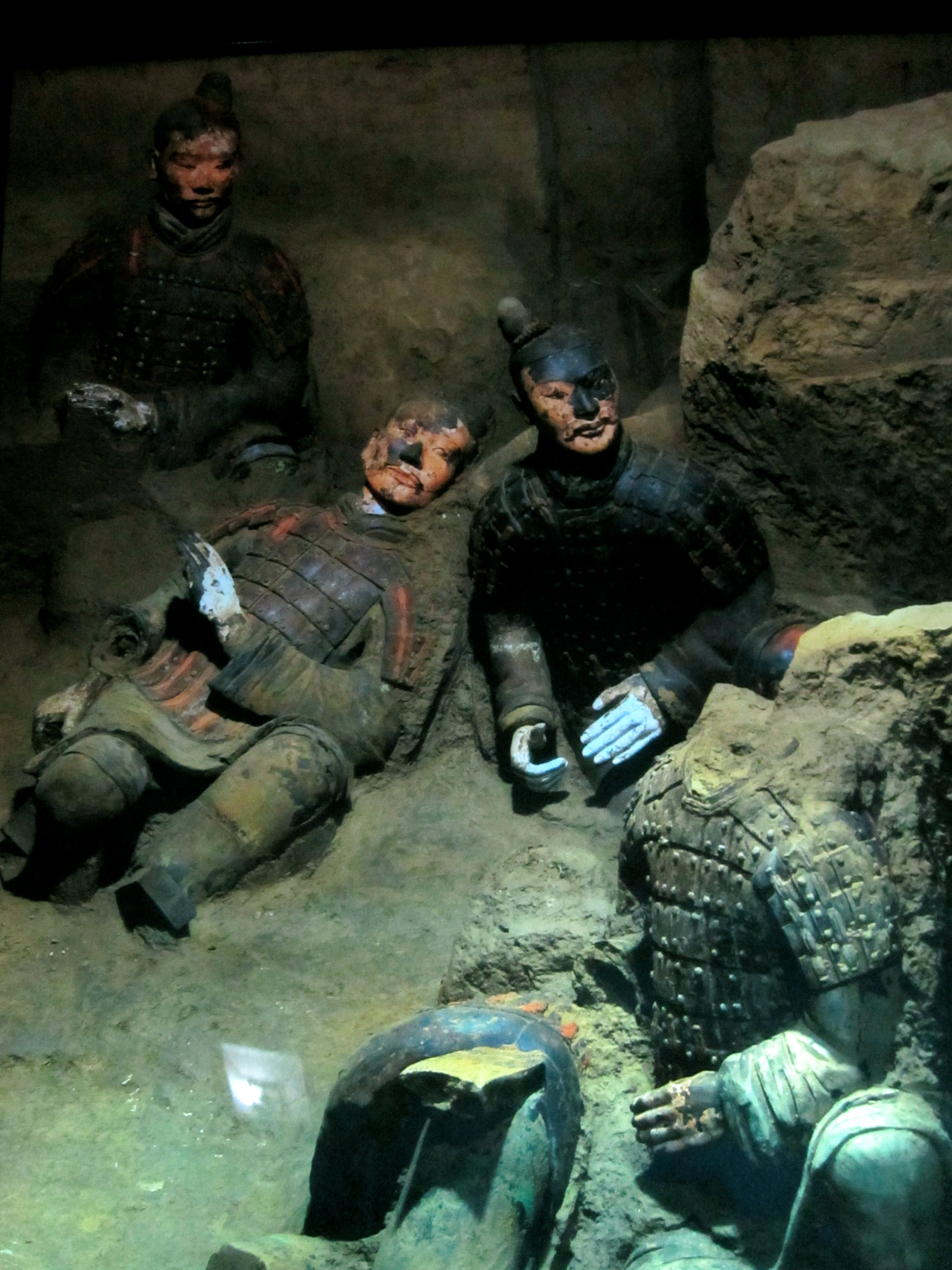
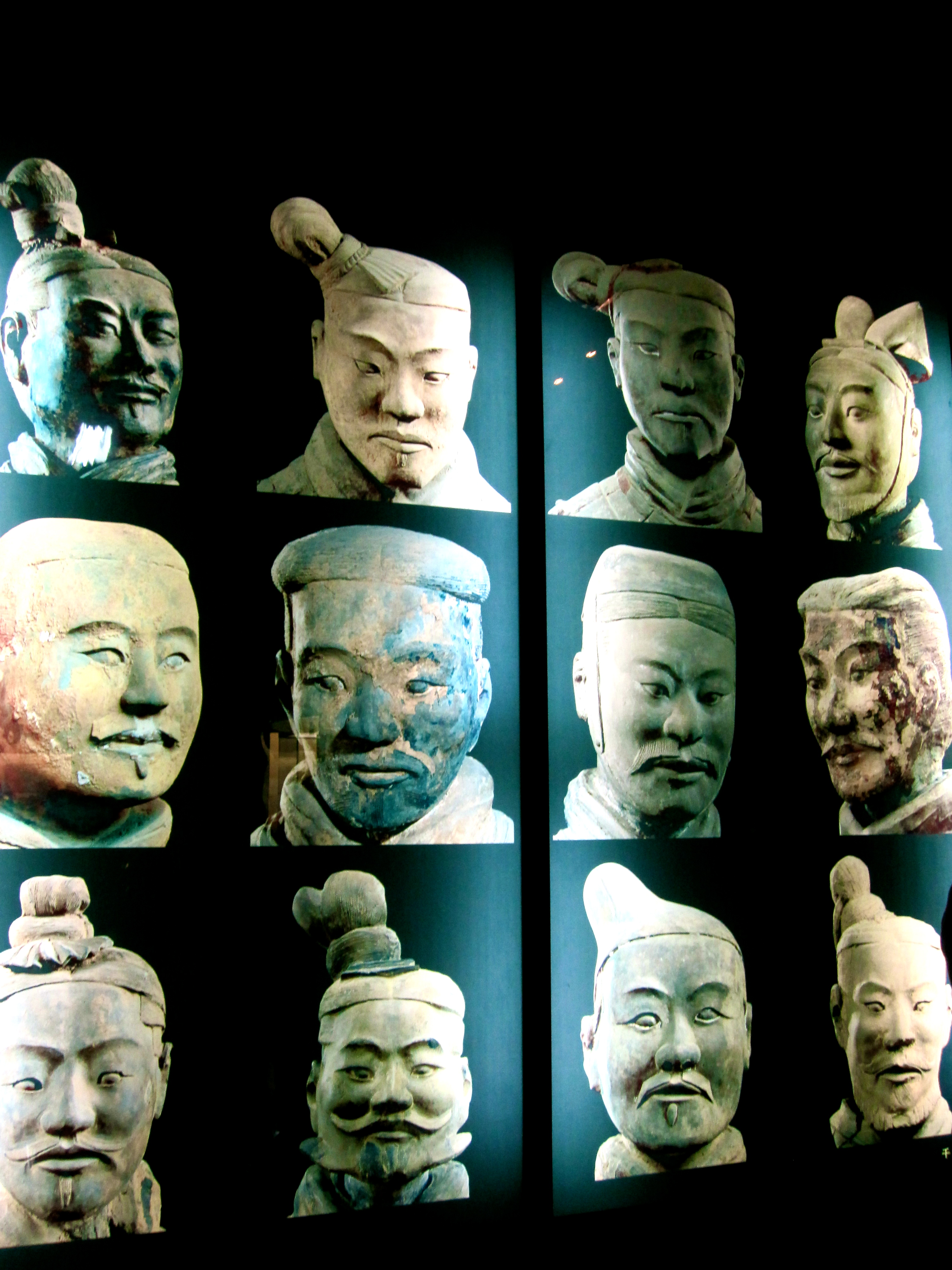
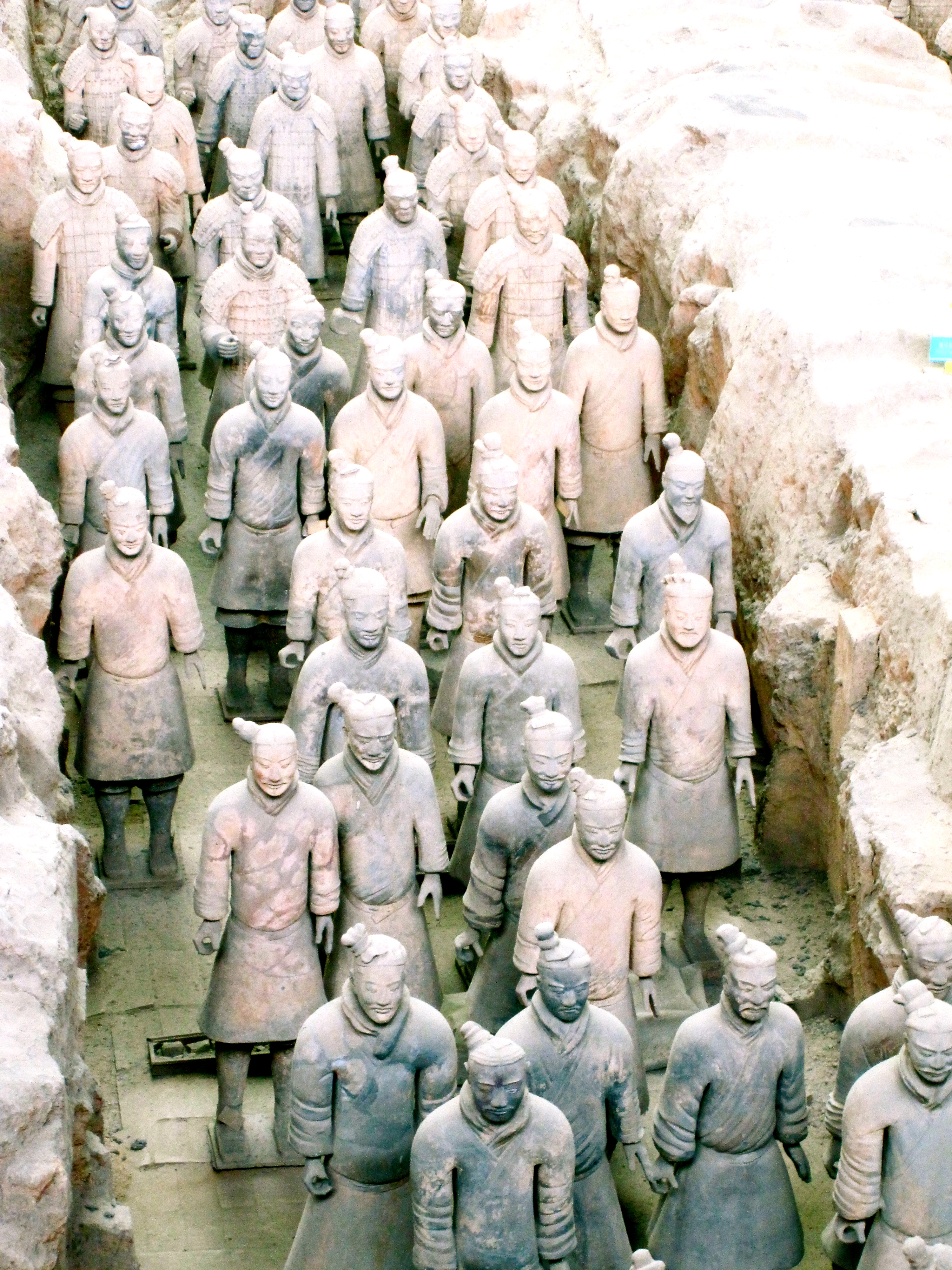
The Mausoleum is separated into three separate excavation sites. We entered the first pit with a lot of expectation—what exactly, I cannot say, but we were enormously disappointed after we circled around the lines of Warriors encased by dirt and found that the much anticipated Terracotta Warriors looked like they were directly taken out of our 8th grade textbooks. But before I dismissed the entire place as a tourist trap, a small detail at the second pit caught my eye: each of Warriors’ face is different. My perspective turned 180 degrees and, slowly, I realized that behind each Warrior was an artist, a slave presumably, who shaped the postures, designed the facial structures, and carved the detailed armor decorations. Even the soldiers’ hairstyles differed. Moreover, scholars believe that many of the Warriors’ faces and armor were dyed with pigment. I wanted to know whether or not each Warrior was created to actually represent real-life Qin Dynasty soldiers. I wanted to know if the emperor forced his people to make his after-life army or if they did so out of love and concern for their king. All the Terracotta Warriors—lined up with such precision according to ranking and division (some were archers, some generals, some without armor, some kneeling and others standing) aside terracotta chariots and horses at the three pits—spoke monuments of the sweat, blood, and creativity poured into the creation of the army. In addition, those that we saw were just a small portion of the entire lot. Thousands of terracotta figures are still left. When I reflected on the enormity of this project, I became more and more impressed.
Later that afternoon, we went to the Shaanxi History Museum, where we skimmed over countless collections of beautiful pottery, paintings, and calligraphy. There were also multimedia history lessons of which emperor did what during which time period. Xi’an was the capital of Imperial China, the country was mighty and invincible empire. I was standing in front of an interactive map that showed me the vast amount of territory the Chinese empire had acquired during the different dynasties, and it was then that the greatness of Ancient and Imperial China hit me square between the eyes. No wonder the people of Ancient China and Imperial China thought they were center of the world (hence the name Chinese name for China “zhongguo”, where “zhong” means center and “guo” means country.) This remarkable history is the cause of joy and pride of Modern China, and I finally understood. The combination of the Terracotta Warriors and the map of acquired Chinese land struck me, and, for the first time, I felt what Chinese people feel towards their beloved country: pride. I felt proud to have a Chinese heritage. But, sadly, I also felt ashamed that my knowledge of Chinese history was so lacking, incomplete, and full of holes. At the same time, I knew that being in Xi’an and feeling such sentiments, I was one step closer to redeeming what I had lacked.
Article written by Cherrie Chen.
