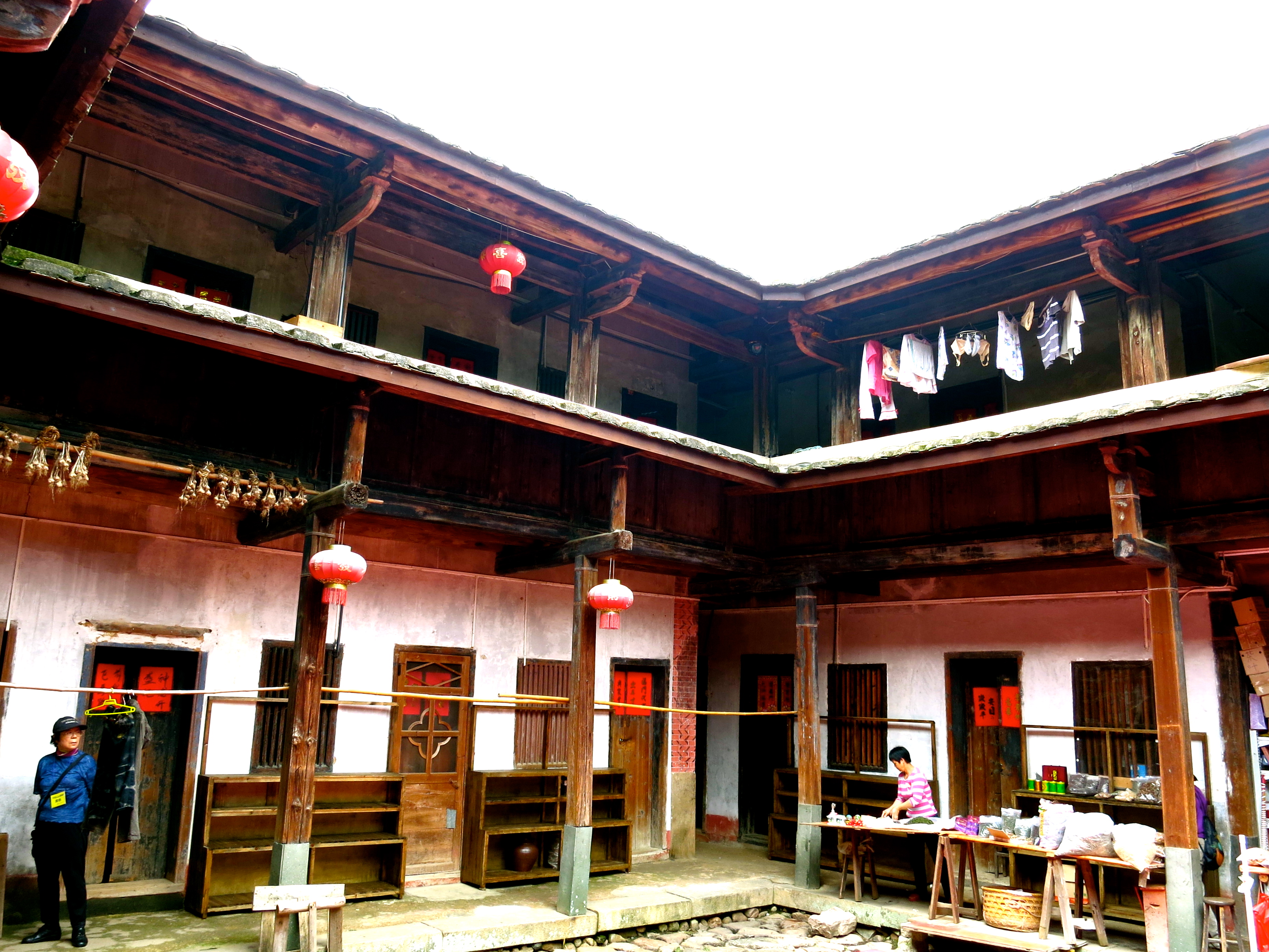
At Fujian Tulou is where old meets new.

A woman sat eating her bowl of vegetables on an old wooden bench. Moss that grew in between the cobblestones on the floor had crept up the legs of the worn bench, forming a gradated pattern that gradually faded towards the seat of the bench. Above her hung several Chinese lanterns, and on the door behind her was a piece of paper of the same red shade. Beside her a child played intently with a wooden yo-yo, and another older woman crouched beside a pile of newly washed clothes, hanging them one by one on a wooden pole. Behind the walls of Fujian Tulou, she seemed to take no notice of the huge Caucasian man directing a Nikon DSLR inches away from her face. In fact, the two women continued with their chores so completely unruffled by the mob of tourists in the distance that it would have seemed as if they did not exist, if it was not for the child looking up curiously at the newcomers from time to time.
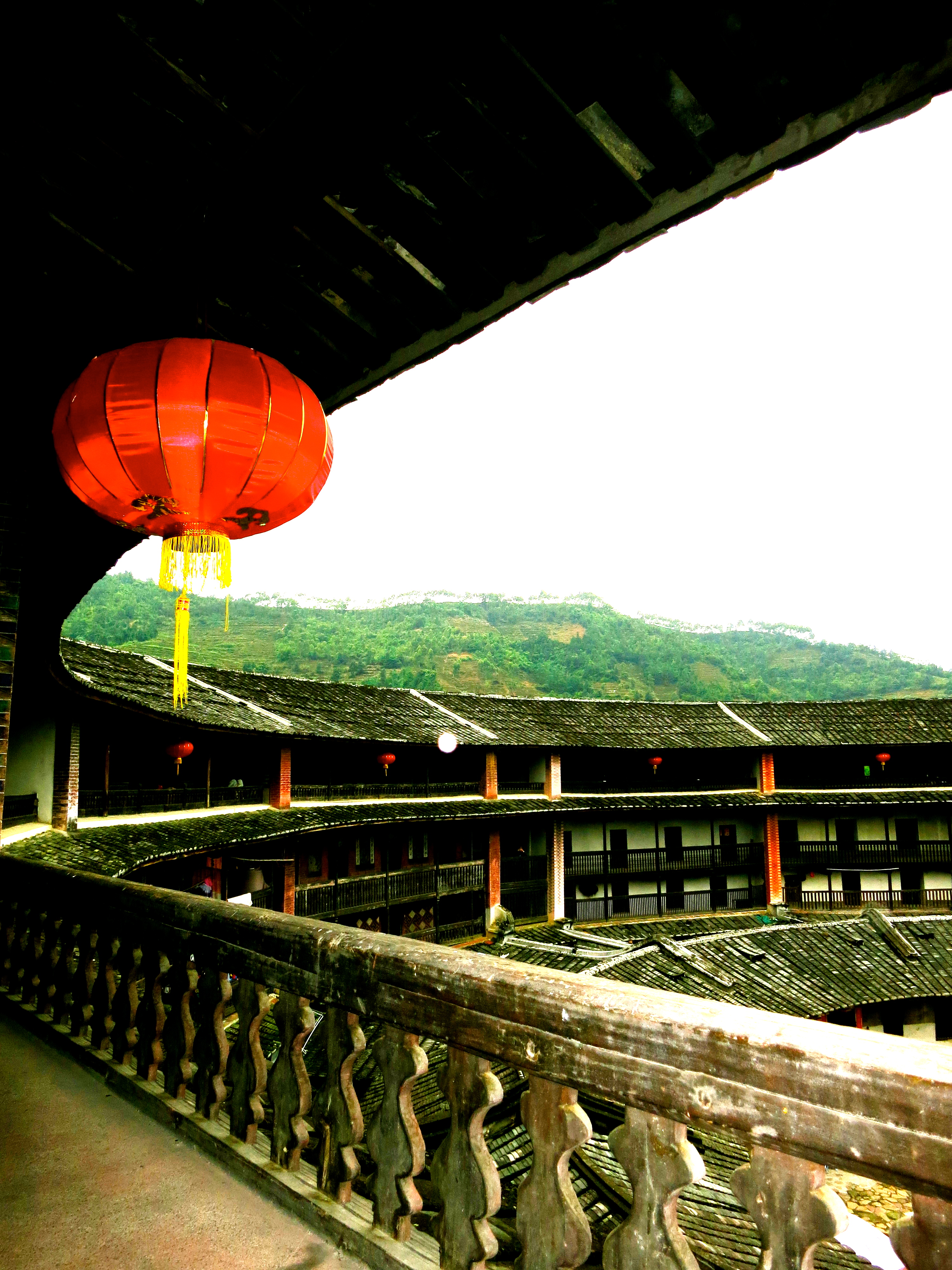
It was a curious scene. Despite the tourists, it was as if I had stepped into a different world entirely. It was a world of Chinese warlords and Kung Fu masters. It was a world where ancient spirits roam and villagers live quietly, away from the clamor of city life. Yet, here within the ancient walls of the Fujian Tulou 福建土樓, a certified UNESCO world heritage site and one of the few in the world still inhabited by people, I couldn’t decide which seemed more out of place: the tourists, or the modern inhabitants of these ancient communes.
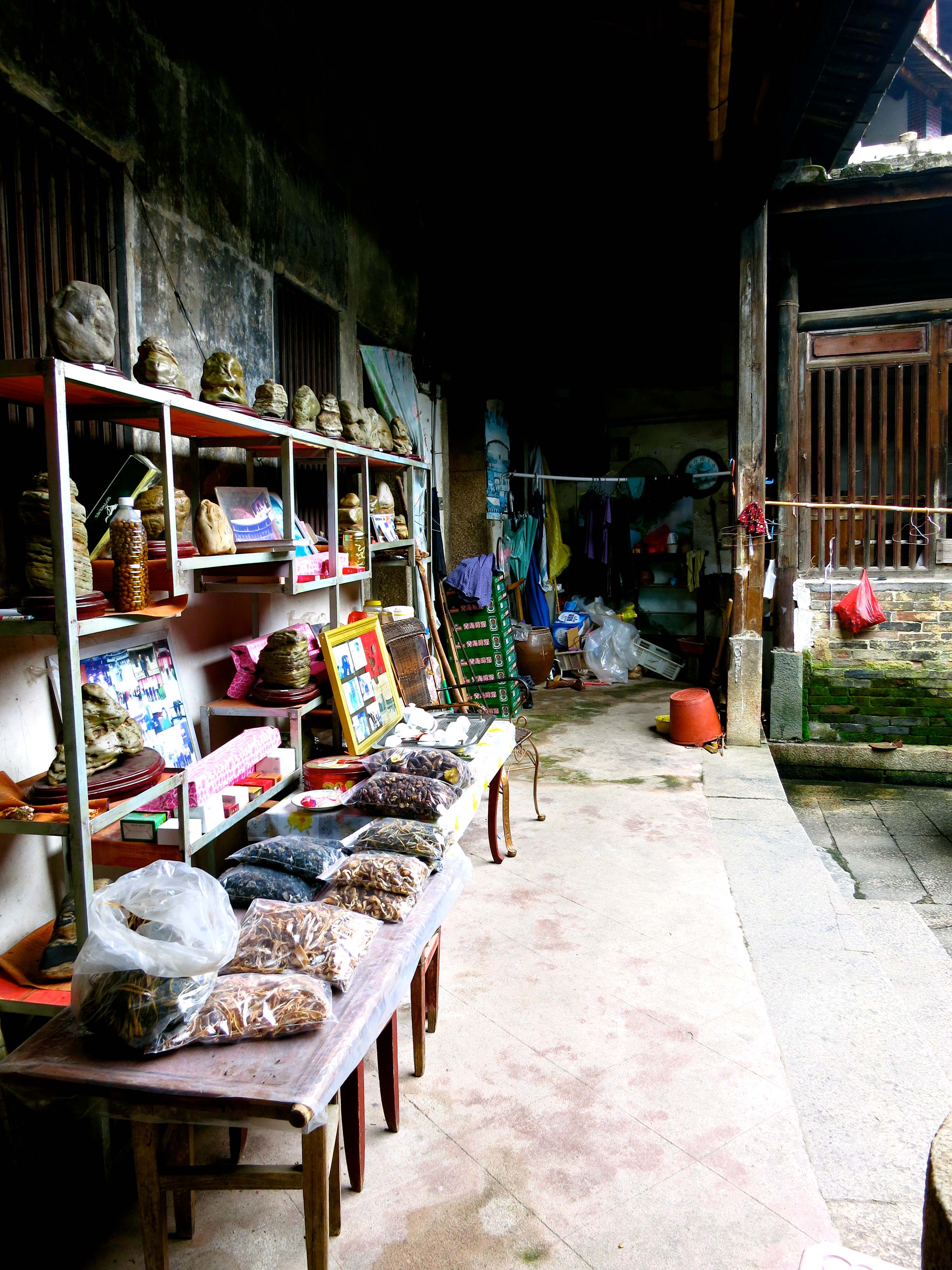
I stood there dumbstruck, half in awe at the beauty and serenity of the place, and half with uneasiness. Was it acceptable to take a picture? It was indeed true that the Fujian Tulou would not be the same without the modern inhabitants. There was a mix of new and old. Modern inhabitants had modern equipment such as televisions, graphic-design tee shirts and motorbikes. However, they were living in the walls of a commune built over six hundred years ago. This made the place all the more interesting and alive. The Tulou were not just obsolete structures, but they still very much used and incorporated into the modern world. I wanted to preserve in my memory the beautiful architecture around me, the tranquility of the quiet lives bound within these circular clay walls, but it somehow seemed inappropriate. I tried to imagine what it would be like to live a life like theirs. It was perhaps the equivalent to living in a model house constantly visited by outsiders, always being watched. Yet unlike in the model house where the inhabitants would be living in a place designed solely for viewing purposes, this was a place which both visitors and inhabitants had equal rights. Originally built as a place for people to live, the Tulou had been, and still were, residential quarters. On the other hand, as a world heritage site attracting tourists from all over the world, it was simultaneously just as much a tourist destination, a symbol of the cultural history of the Chinese people.
Though the woman and her family seemed relatively undisturbed by the havoc around them, I wondered whether their ‘privilege’ of living in a place that is considered to be of high cultural importance justified being made a spectacle of. Did the people mind? Was it something that you grew used to? Was it just a matter of not knowing anything else? What did they think of us? Perhaps we were something they had just learnt to ‘put up’ with. Or perhaps they treated it like a job; after all, the tourist industry was probably a large source of their income. Or perhaps they even viewed us more positively: as people who took genuine interest in their culture and way of life. And yet, the man with the DSLR, obsessively taking snapshots of the old woman laundering from every angle possible, or the two Japanese teenagers posing to take pictures with every “kawaii” child they spotted in the Tulou seemed almost silly, comical. It did not seem to me as if they were genuinely interested in the culture and the lives of these people. It seemed as if they were intrigued with the idea of having been in a historic place, and of securing its evidence with a camera snapshot.
I wanted desperately for the inhabitants to understand that my desire was not to make a spectacle of them, but to appreciate their home and cultural history as I saw it. So, swallowing my embarrassment at my broken Chinese, I spoke to the woman: “你们的土楼非常漂亮!我可以拍摄一张照片吗?”The woman seemed surprised at being directly addressed, and looked around her, unsure. But then she broke out into a broad smile–perhaps laughing a little at my intonation–and nodded. It’s true: a little communication really does go a long way.
Article written by Chihiro Isozaki.