I felt like I was in 15th century Genoa, wandering through lanes, deserted by the plague, passing closed doors hiding people taking refuge from the pestilence.
The rain had just subsided, leaving the narrow, cobble stone streets of Genoa water stained and slippery. The clouds parted, and the hot Italian sun surged down, pounding on the crown of my head and covered shoulders. I was travelling with the family I was au pair for, and we wound our way through a maze of shockingly narrow streets, wide enough only to walk through, flanked on either side by mossy stone buildings dating back to the 15th century. The ancient buildings appeared to tilt together at their roofs, trapping me in the gloomy maze and obscuring the street from the sun. The stones underfoot were uneven, slightly dirty and radiated a mixture of strange smells. The whole experience was eerie. A tinge of unease and discomfort spread from the pit of my stomach as I remembered this was the city where the black plague had begun in Europe. The feeling of quiet, morbid desolation still lingered in the streets. I felt like I was in 15th century Genoa, wandering through lanes, deserted by the plague, passing closed doors hiding people taking refuge from the pestilence. The air felt heavy and stale, as if it was still ripe with disease. I held my breath, making my heart beat faster; the blood pounded in my ears; we rounded a corner and a burst of sunlight shone down a long flight of stone steps leading up into an open courtyard. I released my breath, nearly gasping for fresh air, and headed up the steps.
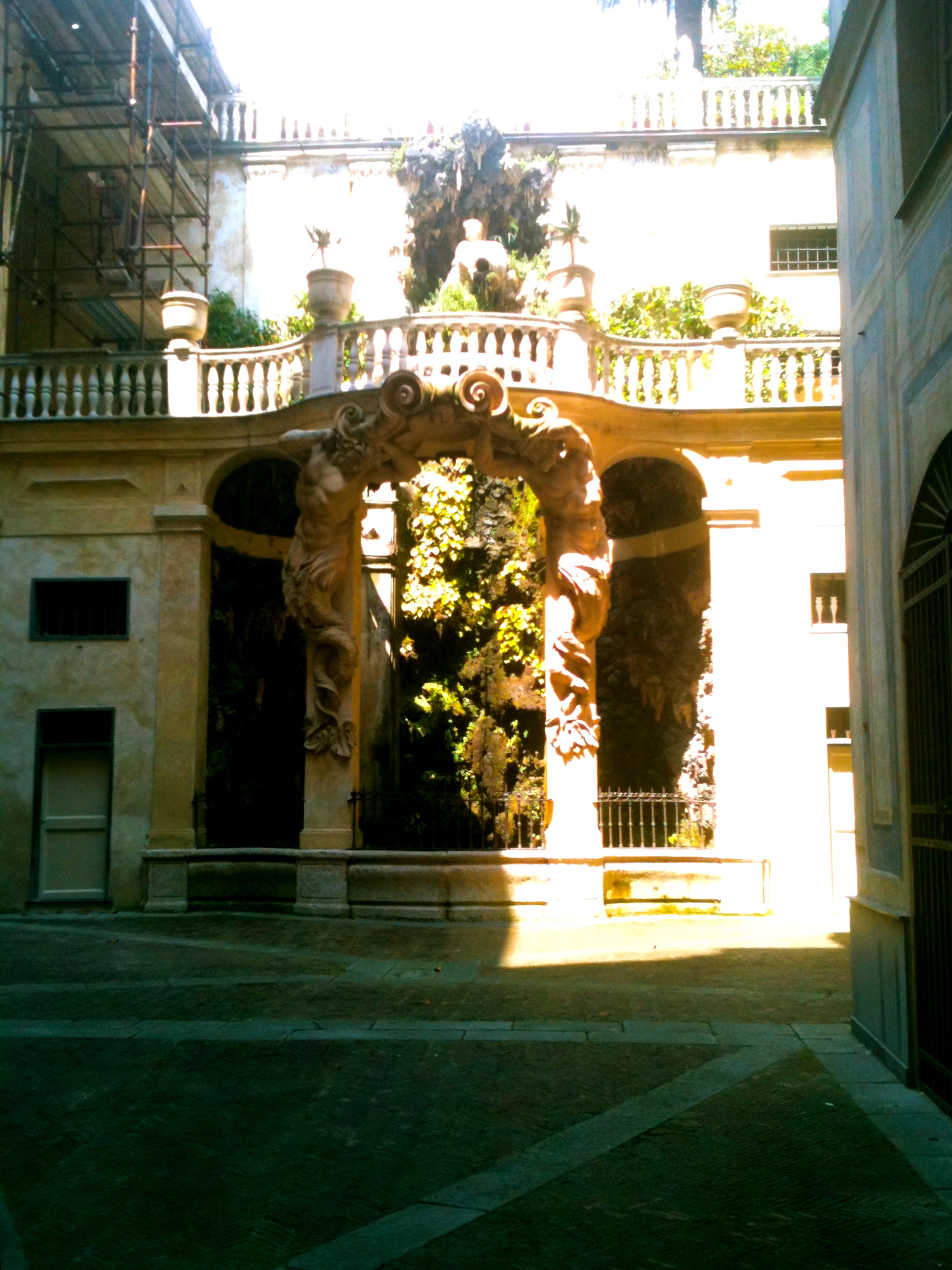
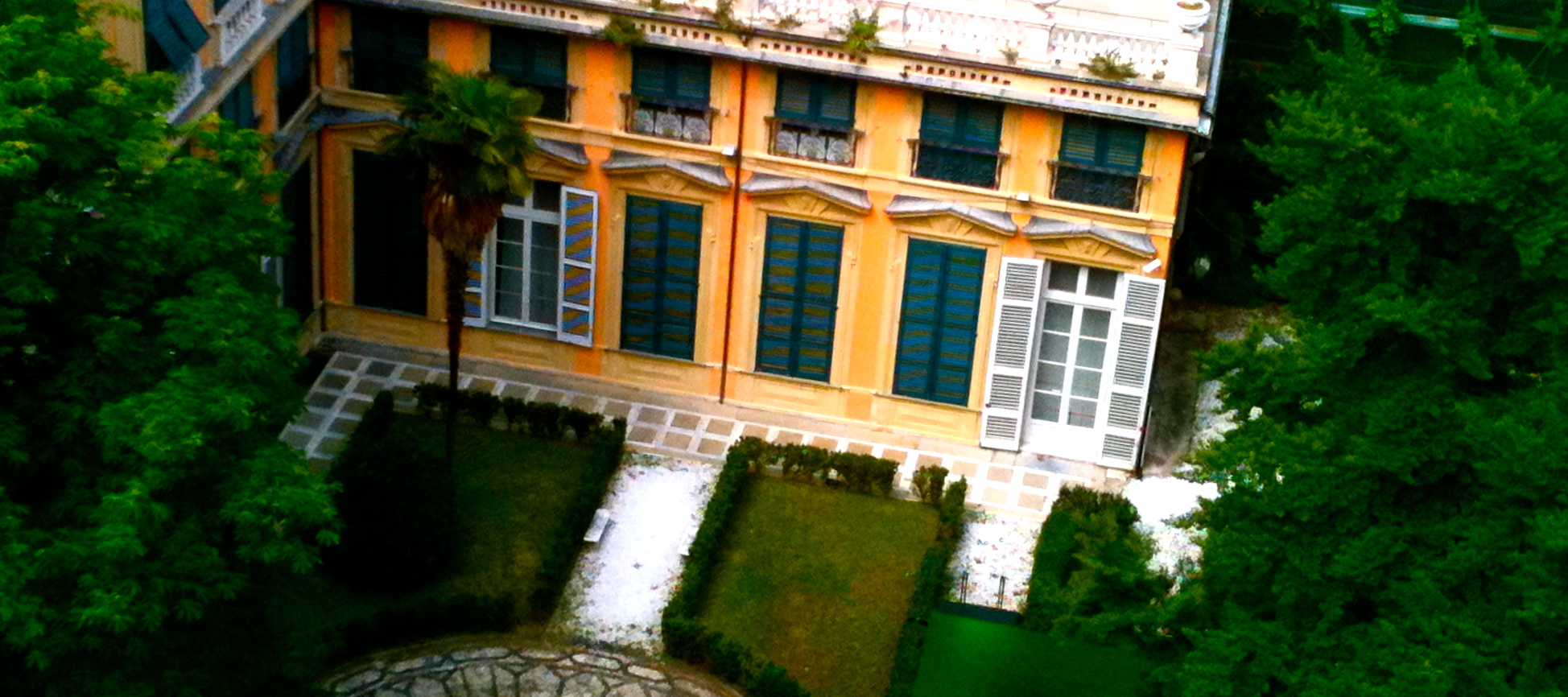
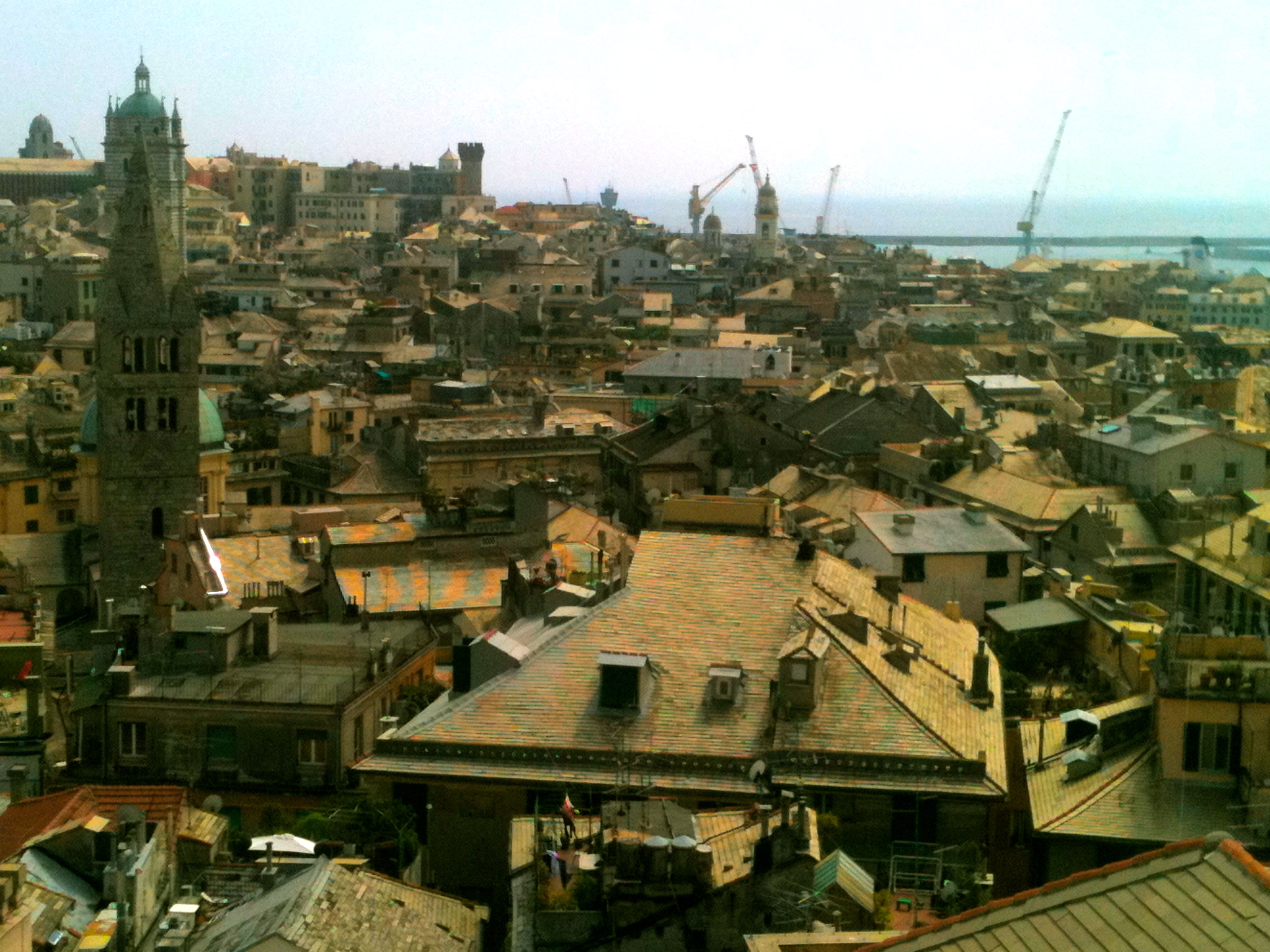
I emerged onto a wide-open street, lined with magnificent building facades and small, but luxurious looking, cafés and storefronts. I had climbed out of the stale, disease-ridden lanes and reached the pure, open air of an avenue of palaces. I wandered down the street, passing grottos, peacefully trickling behind iron gates and large, arching windows, with white curtains billowing in the warm, salty breeze. I gently pushed my gold-rimmed aviators over my squinting eyes and slowly, luxuriously filled my lungs with the light, rejuvenating air. My employer bought me an entrance ticket to the Palazzo Rosso and I strolled in, holding the hands of the girls I took care of, head tilted up, admiring the colorful frescoes on the arched ceiling. Me and the girls skipped up a long, red velvet staircase and then stepped into a glass elevator, destined for the roof of the palace. The elevator rose and then stopped, and we walked out into the open air. The sun was clear and warm as we trekked up a long, narrow flight of rickety stairs. The steps led to a tiny observation platform, and turning around I looked out over the entire city of Genoa. A sea of red-brown ceramic tile roofs and neutral hued buildings spread out in an arch and sloped down to half-moon harbor. The sight was breath taking. Turning around, I peered down into the pristine courtyard garden of the adjoining palace, lined by carefully pruned, bright, pinky-orange roses and perfectly linear dirt paths leading to a chattering water fountain. The scene was awe-inspiring, but somehow welcoming and familiar. I felt like I belonged there, wandering those dirt paths on a warm summer night, somewhere back in the 16th or 17th century. The feeling rested in my chest as I made my way back down the stairs.
We got back in the glass elevator and went down one floor to begin our tour of the palace. When we stepped out into the first room, an enormous, magnificent painting stood, mounted to the wall in front of us. I stood and admired it as the girls ran off to explore the rest of the palace. I slowly strolled from room to room, wandering farther away from the family, my worries and my responsibilities. The feeling of comfort and belonging that had planted itself in my chest swelled, spreading like a golden serum through my entire body. Beautiful portraits revealing the people who had walked these halls centuries ago hung on the walls; magnificent furniture was arranged in simple, classically minimal formations in each room. The shocking thing was, none of it felt old. It did not have the dated, almost unreal feeling of the Palazzo Reale , back in Torino. It looked and felt, modern, as if lives were being lived here, now, in these glowing spaces.
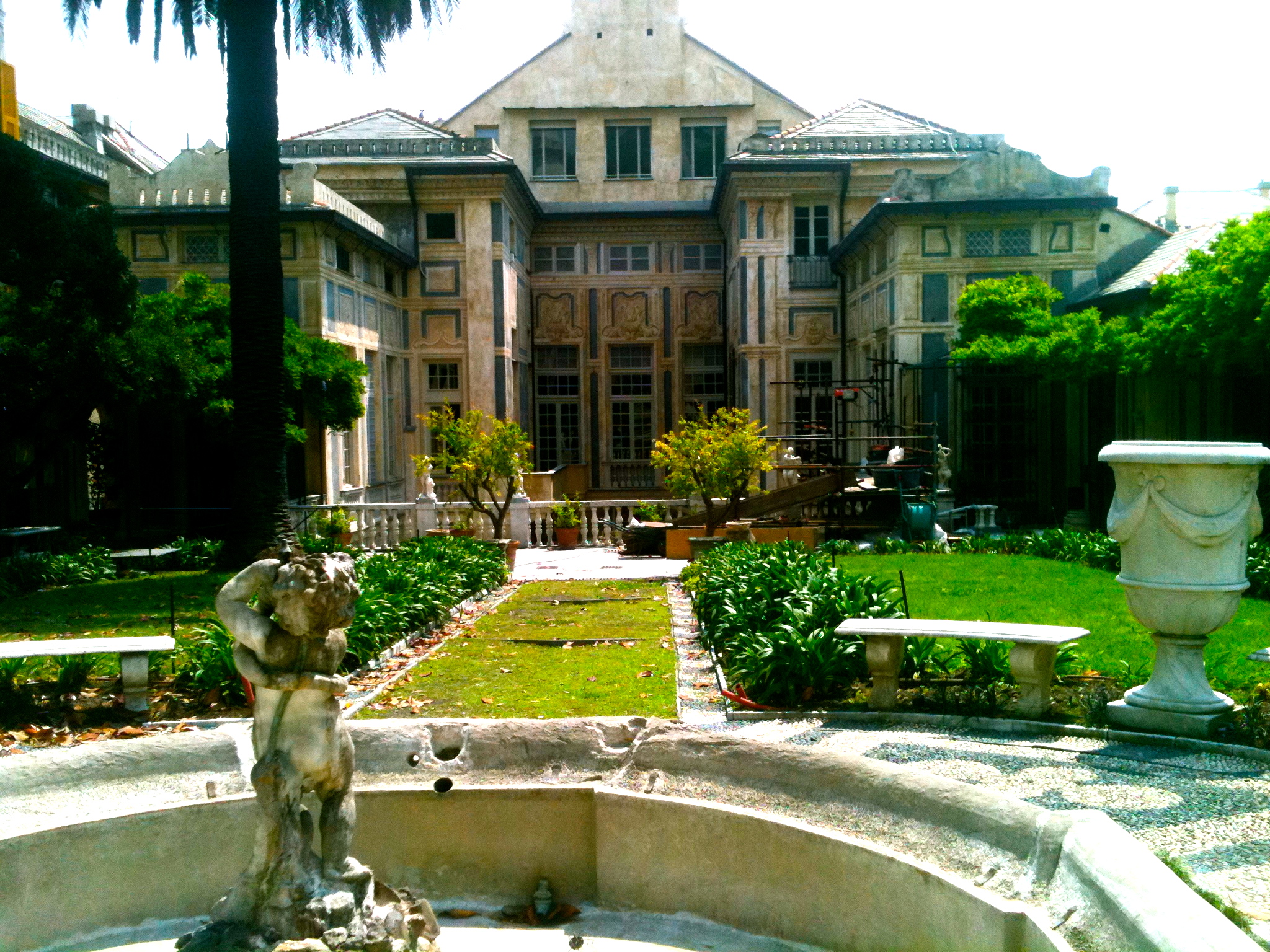
My sandals slapped delicately on the black and white checked marble floor. Rich curtains hung in the windows, but they did not create an old, stuffy feeling. The room seemed open and light and looked out over the courtyard I had observed from the roof. From another window I could see yet another courtyard, this one overflowing with carefully clipped green shrubs. I felt more at home than I had anywhere in a long time. It was not so much a feeling of comfort but an intense sense of belonging. This was real life; it was another type of existence than I experienced back home in the US; it was elevated, refined yet bursting with a sense of energy and wildness; it bloomed with a sense of cultured intelligence; understanding and brilliant kindness despite obvious wealth and power. I experienced a sense of opening, a new part of my being awakening. My mind felt light and acutely perceptive, as if my eyes captured and compassionately understood each ray of light that reflected off of them. As I stood there, melting with this new world, a thought entered my mind: “How can I go back?” After experiencing this elevated state of living, this enrapturing environment that welcomed and comforted me, knowing I belonged there with it, how could I go back to the US? Back my normal life? Back to class and spending the evenings in the synthetically lit library, getting frozen yogurt or watching cheesy movies in my friend’s apartment? I couldn’t do that after being here.
This was the life I wanted to live, the world I belonged in. I stood there, mulling over the question, until my mind clicked. I would go back, I had to; but it wouldn’t be the same life, the same existence, because I was a different person. I realized that over the past month away from home, I had become a different person. It was terrifying. I couldn’t imagine how this new person, this new me, would fit into my old world; but that is part of the adventure. Traveling is not just the adventure of going somewhere new, but of becoming someone new; it changes you, and you can’t possibly predict who you will be at the end of the journey. You go into it knowing you are leaving the current you behind, and the person who steps off the plane how ever many weeks from now when you come home won’t be the current you. The miraculous aspect of it is, you don’t lose anything. You get to come home as something new and exotic and gain the ability to redefine the life you live and experience everything that was common and familiar as a brilliant and daring new adventure.