
The Mekong flows along the length of the country, and sticky rice, the staple of Laotian cuisine, requires flooded paddies in order to flourish.
The humidity plasters wisps of damp hair to my sweaty forehead, but I can’t brush them away. Both my hands are full, carrying large plastic buckets on either side filled to the brim with water from the local pump; from there, it’s a long walk through the village – all uphill – to reach the school where we’re staying. We need the water for bathing tonight, but without any running water at the top of the hill, carrying it is the only way to get it there. Pebbles are a constant tripping hazard, but as soon as I try to move faster, water slops out of the bucket onto my shoes and onto the dusty road, wasted. I pause, setting my buckets down and giving my cramped claw-hands a brief moment of respite. Brushing those irritating hairs out of my face, I look up to see my friend walking in the other direction back towards the pump, carrying empty buckets with her. “We’ve filled about a third of the tank,” she says. I respond with a sigh, shaking out my aching arms and wondering if this evening’s shower would be worth it.
Water holds a special place in Laotian culture. The Mekong flows along the length of the country, and sticky rice, the staple of Laotian cuisine, requires flooded paddies in order to flourish. In mid-April, the Water Festival marks the lunar new year, with a giant water fight taking place in towns and villages to symbolize cleansing of the body and spirit. Yet only 50% of the country’s rural population has access to clean water. The village we were staying at was relatively fortunate – they not only had a working pump, but they were also situated close to a tributary branch of the Mekong. A group from my school was visiting to volunteer at the local school, teaching English in the mornings and helping build houses in the afternoons. Few of us had ever taken bucket baths before, but that night we were grateful for small tankful of water that we had struggled so hard to fill, rinsing off the grime of a long first day in Laos.

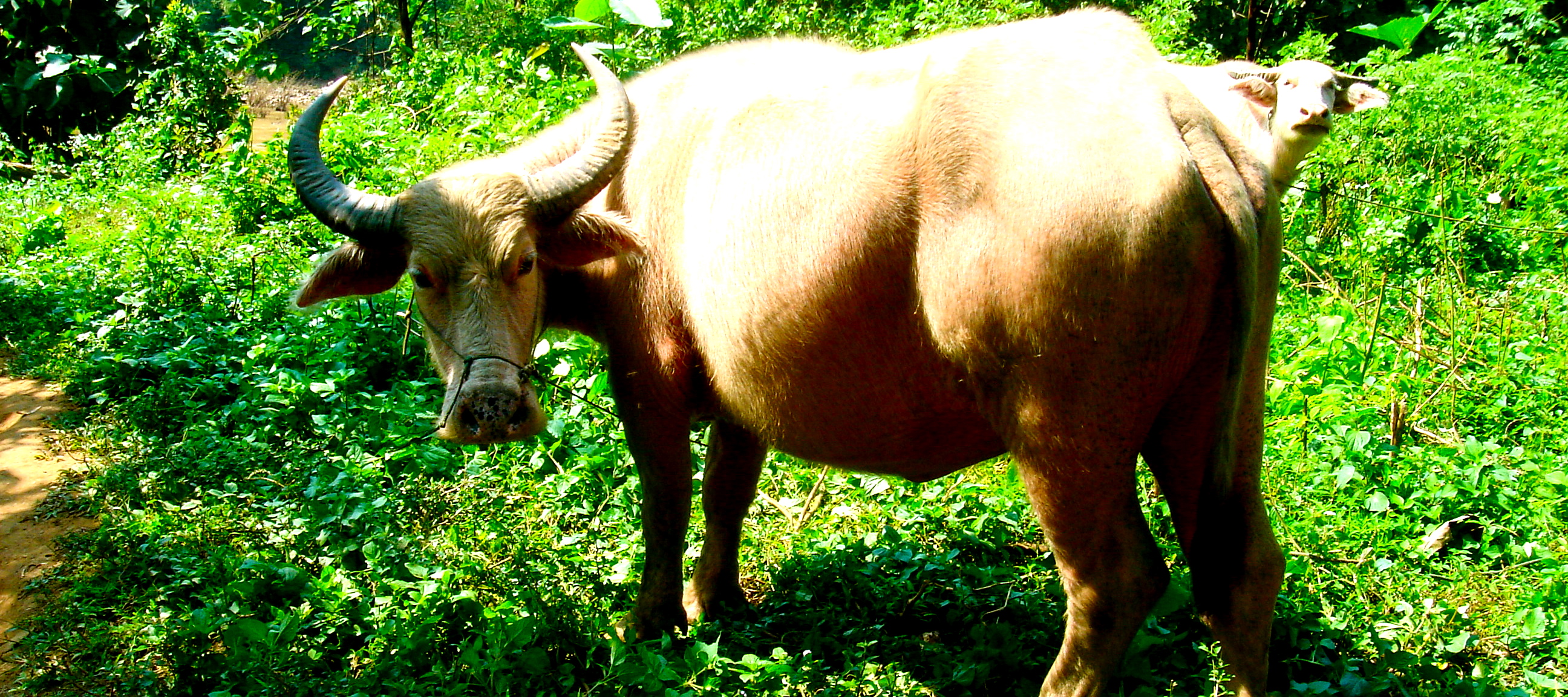
The next morning, we were kept occupied with our various responsibilities up until the late afternoon. Sweaty, dusty and exhausted, we needed to get clean, but none of us wanted to go through the process of carrying endless buckets of water up the hill again. So I suggested that we go try bathing in the river – after all, if the locals did it every day, why shouldn’t we? After a willing villager pointed us down the right path, we walked in single file through the tropical undergrowth carrying our towels and soaps, soon reaching the banks of the Mekong. This was no crystalline brook – the water flowed in swirls and eddies, colored a light brown from the silt that it had carried all the way from the Himalayas. I hesitated, thoughts of parasites and leeches and horrible water-borne diseases coming to mind. A group of water buffalos grazed on the bank nearby, one of them standing up to its belly in the river, watching us with limpid eyes. As I gazed back at it, I made my decision.
Tightening my sarong, I leapt into the water, surfacing with a triumphant gasp of delight. The cool water felt so good against my sweaty sunburned skin, instantly melting away all the tension in my limbs. As my friends joined me in the water, attempts to scrub each others’ hair dissolved into an afternoon of water fights and swimming races. As the sun started to set into the trees, we emerged wet and dripping, in high spirits despite the long day. Following the buffalo back towards the village, one of my friends remarked “I had my doubts about bathing in the river, but now I don’t ever want to bathe from a bucket again.” Smiling, I sincerely agreed.
Article written by Asia Chiao.
