Black literary genius from Harlem, NY, James Baldwin, is most notable for his essays and novels that discuss issues of race, sexuality, and class during the mid-20th century.
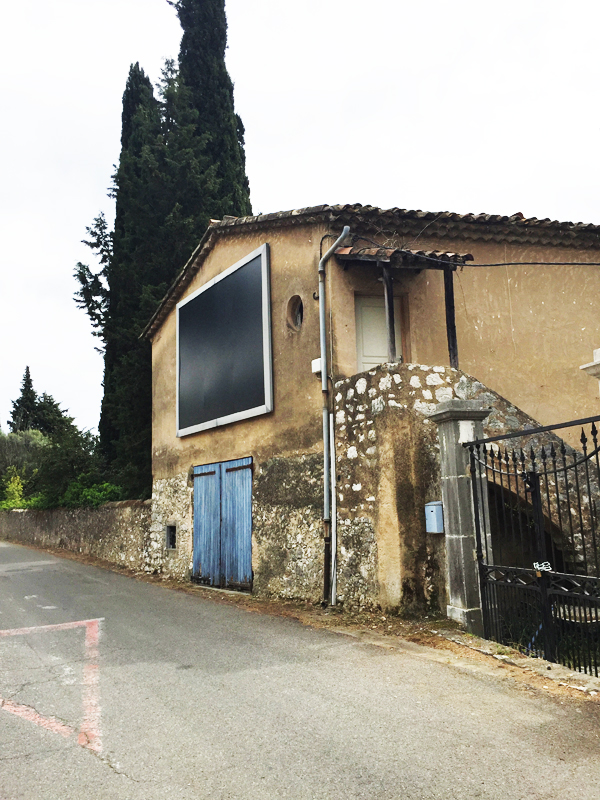 Photo: Chantel Taite
“…e approached the property, an extremely wide and shallow expanse of overgrown grass, orange trees, cypresses, wild lavender, and palms that gives sweeping views of the walled town above, the sun-drenched valley below, and, in the distance, the Mediterranean’s rippling sheen.” – Thomas Chatterton Williams (The New Yorker)
“Breaking Into James Baldwin’s House.” I glanced again at the headline to make sure that I had read it correctly. I had.
Earlier this spring, I came across Thomas Chatterton Williams’ feature in The New Yorker and Rachel Kaadzi Ghansah’s BuzzFeed essay, which bring attention to the current state of James Baldwin’s last place of residence in Saint-Paul-de-Vence, located in the South of France. In their accounts, both journalists provide striking details of their explorations inside the dilapidated remains of the acclaimed writer’s house.
Black literary genius from Harlem, NY, James Baldwin, is most notable for his essays and novels that discuss issues of race, sexuality, and class during the mid-20th century. His writing style is sealed with raw, honest reflections and contemplations of society and its affect on black America. At the age of 24, Baldwin left the United States permanently, choosing to spend the rest of his life in Europe. In 1970, he settled in Saint-Paul-de-Vence, where he eventually died from stomach cancer. Today, Baldwin’s legacy remains strong as his literature is taught in college classrooms.
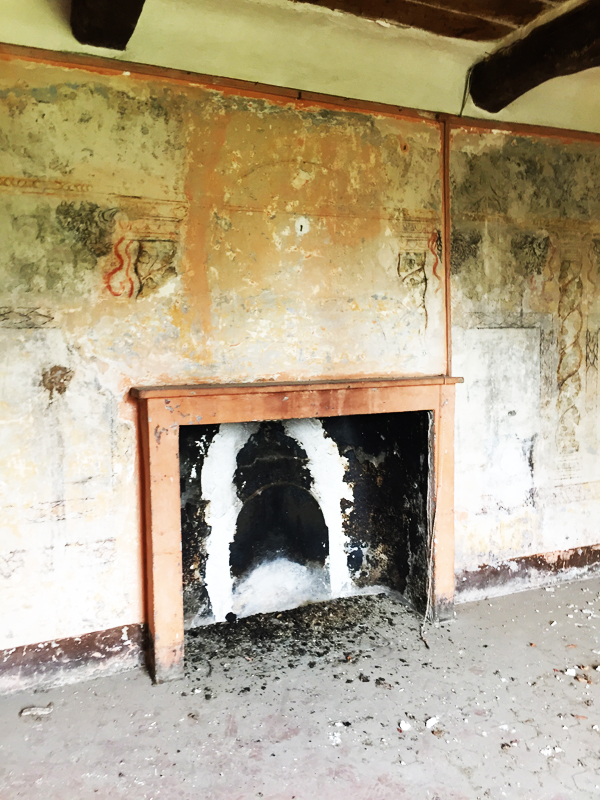 Photo: Chantel Taite
Sitting in the library of my host institution in Bordeaux, I hungrily digested Williams’ and Ghansah’s findings. I knew that I had to find a way to get to this house and experience its magic for myself. Two weeks later, I found myself sleeping on a host’s couch in Nice.
My adventure began at 5:30 a.m. I purchased a Sicilian blood orange, drank an espresso, and headed towards the bus station.
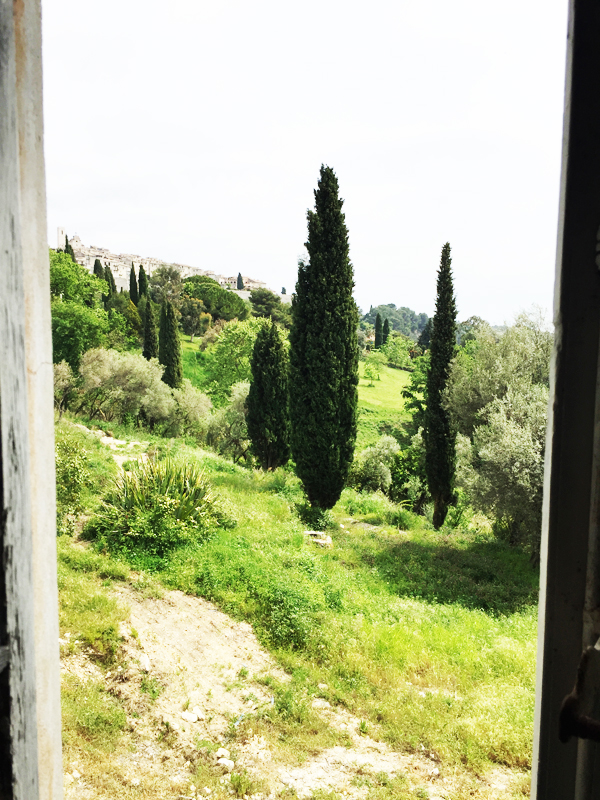 Photo: Chantel Taite
Planning to take a bus ride from Nice city center to Saint-Paul-de-Vence, I boarded bus n°400. An hour later, we arrived to the village. I felt a surge of energy as I gazed around. It was exactly as Williams and Ghansah had described. The city center stood surrounded by a medieval-looking wall, overlooking a vast valley below.
After receiving directions from the information center, I began to walk. About twenty minutes later, I realized that I was lost, with the hills looking down at me. I knew this couldn’t be right, since both journalists had described Baldwin’s house as sitting atop a hill.
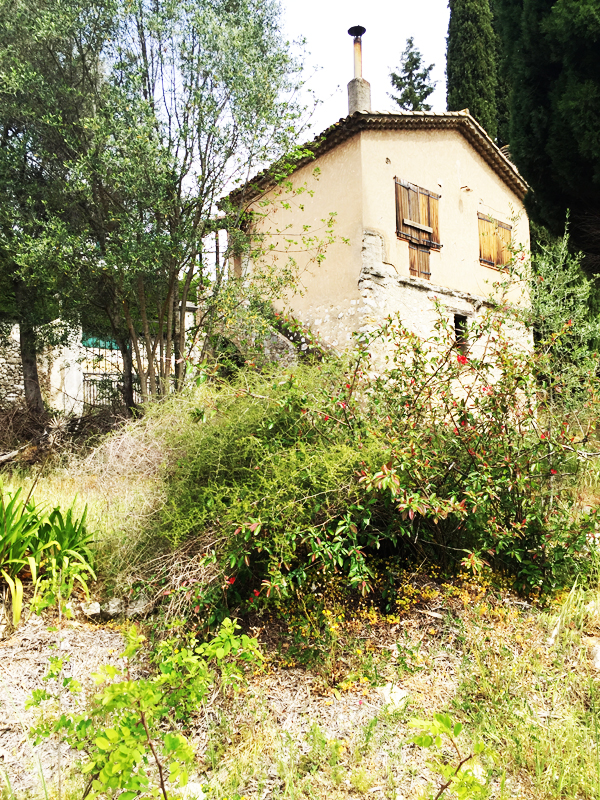 Photo: Chantel Taite
Retracing my steps, it was getting hot and I was getting frustrated. Finally, I saw a construction worker coming down the dirt road. I flagged him down, asking him did he know anything about the house. He replied, “Oh, you mean Jimmy’s house. It’s right there.” Again, that surge of excitement was present, and my motivation had returned. There it sat perched on the hill, fragile and sagging from neglect, yet an air of pride and strength about it. I was so close. Following his directions back up the hill, I turned successfully onto Route de la Colle and walked up and down the road until I finally found it.
It was just like in the pictures: the blue wooden door, the heavy iron gate, the cypress trees. I pushed on the gate, but it would not budge. There were large insects crawling along the top of the high brick wall; there was no way to jump it. It had been almost two hours since I had gotten off the bus, and I still hadn’t explored the house.
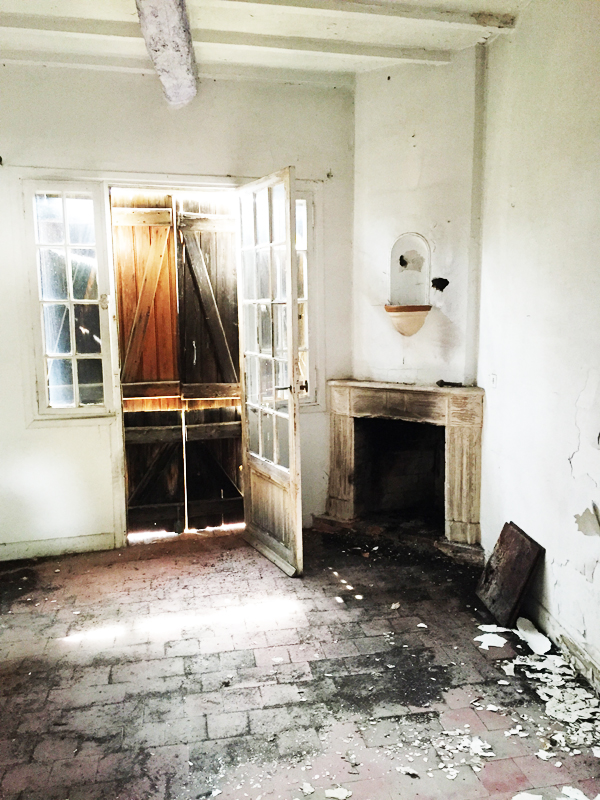 Photo: Chantel Taite
Just as I was about to give up and settle for viewing it outside of the gate, a woman came walking briskly my way down the street. With sunglasses and a huge smile, she walked up to me and stopped. “You’re trying to get into the writer’s house, eh?” she asked. “Come here, I’ll show you how to get in.” She led me further down the road past the house. And sure enough, there was a broken fence. Eureka! I hugged and thanked her, and she continued power walking down the road.
Slowly, I walked towards the writing room. The door was off the hinges, lying sideways on the threshold. Crawling onto my hands and knees, I entered the house. There were faint, beautiful frescoes covering the walls, sheet rock all over the floor, and a soft breeze blowing in through the open windows. Walking towards the window, I took in the scenery of the valley that sat right below. Closing my eyes, I imagined Baldwin looking up, from his typewriter, at the view from time to time for inspiration.
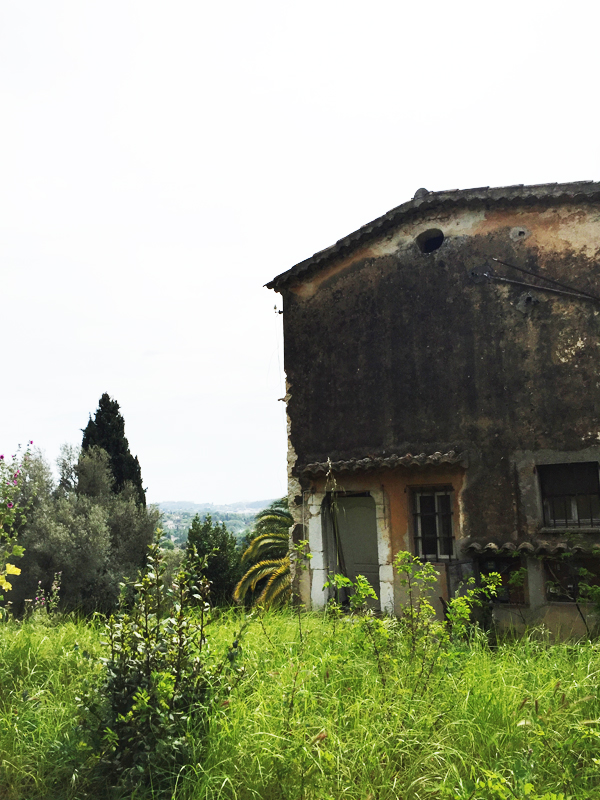 Photo: Chantel Taite
Next, I entered the farmhouse. Stepping into the living room. It was barren, except for a blackened fireplace in the corner and boarded windows. I had read that Baldwin held dinner parties for his friends such as Beauford Delaney, Harry Belafonte, and Nina Simone. Again, I closed my eyes and imagined the living room bustling with life, cigarettes burning, a record player oozing out soft jazz, and chatter discussing current events.
Remembering the Sicilian blood orange that I had bought earlier, I pulled it from my backpack, sat outside on a mound of dirt, and ate. I had to take it all in. As a young black female literature student, visiting the place where James Baldwin completed some of his greatest writings and reflections, this moment was surreal. As my literary hero, Baldwin’s writings had been my main reason for pursuing a degree in Comparative Literature and studying abroad in France.
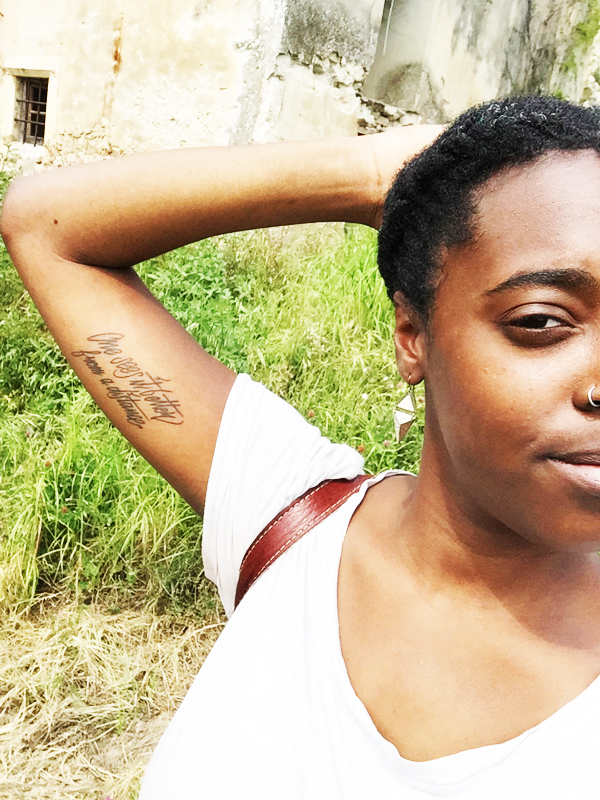 Photo: Chantel Taite
Realizing that it was getting late, I began to leave the property. Before walking through the broken fence, I stopped to look back at the house, the writing room, the cypress trees, and tall weeds, for one final time. I had no idea what would become of this house. I could only hope that someone would try to save the house from demolition in order to sustain another part of Baldwin’s legacy.
Covered in dirt and cobwebs, I turned away and began to head back up the hill, towards the bus stop.