It’s no secret that Copenhagen has an impressive number of cutting-edge restaurants and Michelin stars. Amid all these options, it’s natural to crave an authentic taste of the local roots and food culture in order to truly capture a sense-of-place of the destination. Kadeau in Copenhagen digs deep into Nordic culinary traditions to serve you an original taste of the vast Northern European terrains.
Kadeau originated on the Danish Island of Bornholm where head chef, Nicolai Nørregaard, was born and raised. Bornholm is a rugged and picturesque island in the Baltic Sea. Its unique geography and climate make the island fertile for harvesting superb-quality herbs, produce, fish and meat. Nørregaard, an infinitely talented self-taught chef, harnessed the flavors of his native isle and served them at the original Kadeau restaurant, which he opened in a shack on the dunes of Dueodde Beach. Nørregaard’s sou-chef, Henrik Jönsson, says that Nicolai has the best tastebuds of anyone he’s ever met.
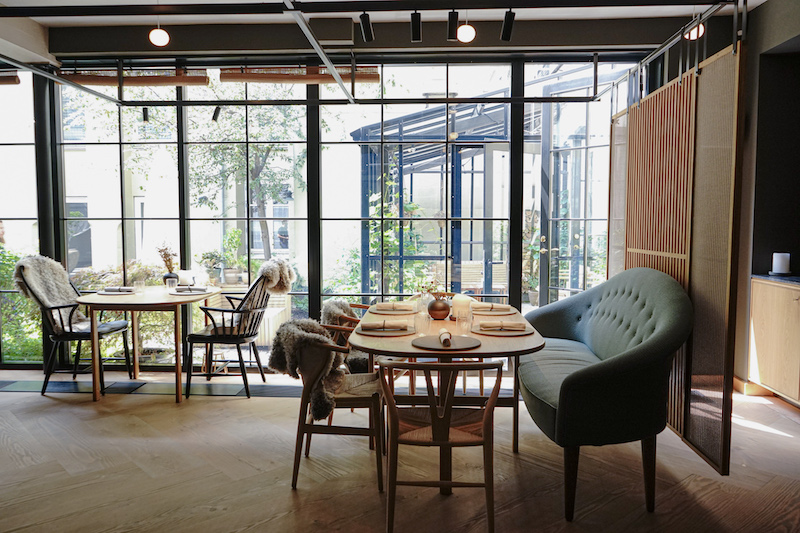
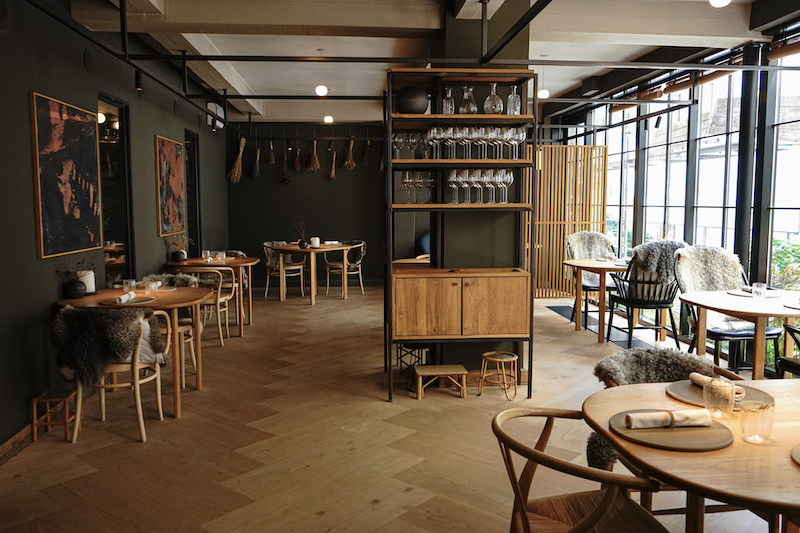
It didn’t take long for Kadeau to gain international attention and a loyal following for elevating Bornholm’s native gastronomy. Nørregaard and his team set their sights on expansion and opened a second location in Copenhagen. Kadeau’s avant-garde Nordic cuisine has so far earned two Michelin stars in its Copenhagen location and one in Bornholm.
Kadeau in Copenhagen still sources much of its produce and ingredients from its farm in Bornholm. Following a strict regional philosophy, the restaurant exclusively uses anything and everything which can be found in Denmark or the surrounding Nordic countries.
“We try to use everything from Denmark. If it can’t grow in Denmark then it’s not part of our menu. We have a team of 3 people a day who go to the woods and go in the garden to harvest. We pickle and ferment. A big thing is preservation, mostly because in wintertime we don’t have all these fun vegetables and flowers and herbs on the beach and stuff. But we have all our preserves which we use.” – Sou-Chef Henrik Jönsson
Kadeau strives to safeguard and revive local food traditions. Foraging is a big part of Nordic culinary culture. The use of herbs, berries and mushrooms foraged from the beach and forests by restaurants such as Kadeau and Noma has created a new line of work for professional foragers. But Kadeau has its own team forage the ingredients which will be used in the restaurants.
“We have something called beach coriander, for example. It’s not woody but it’s quite savory. It’s a bit crunchy. It’s salty and it tastes like coriander. It’s a small grass that grows on the beach. Everyone walks past it but it’s super tasty. You can find a lot of bitter herbs on the beach also and that’s in season right now. It’s a lot of stuff from the woods. We use pine, we use trees, we use absolutely everything. Ants, you name it.”
Ants, despite their tendency to shock and surprise foreign diners, aren’t so uncommon in Nordic food culture. Henrik recounts how he used to spread honey on toast and eat it with ants on top when he was growing up. The wood ants used at Kadeau have a sour tang with a crunchy texture and can be found sprinkled on top of desserts.
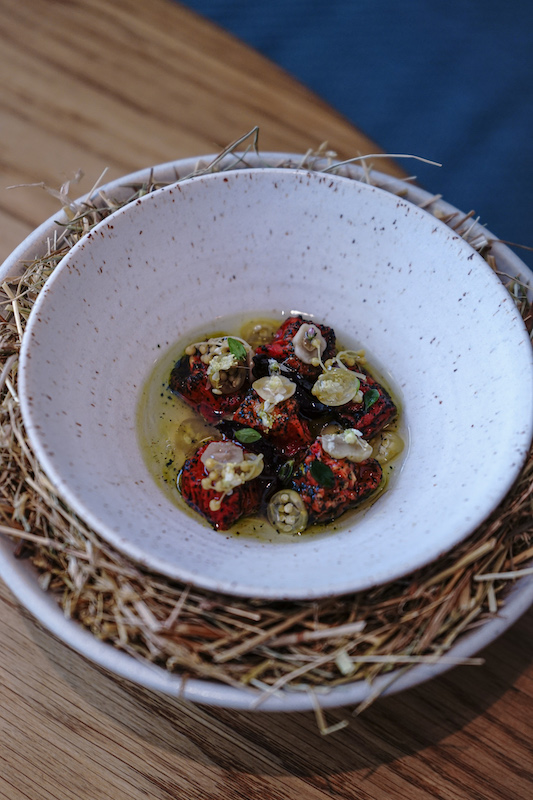
Preservation is another core principle at Kadeau. It makes sense, considering the long freezing Scandinavian winters, that it’s difficult to source the same amount of produce and ingredients in the colder months. In order to abide by its strict seasonal and local food only philosophy, the restaurant preserves much of its bounty during harvest season to use in the wintertime. These preserves are displayed in clear colorful jars next to the kitchen.
Kadeau’s colorful menu is a grand tour of Nordic flavors and ingredients which most foreign visitors will have never experienced elsewhere. It leans heavily into local herbs and produce such as rowan, bronze fennel, ramson and rhubarb root. The apple and tomato salad features a Danish strain of very small and firm apples (a mix of crab and red apples) with a sauce made of smoky blackcurrant wood.
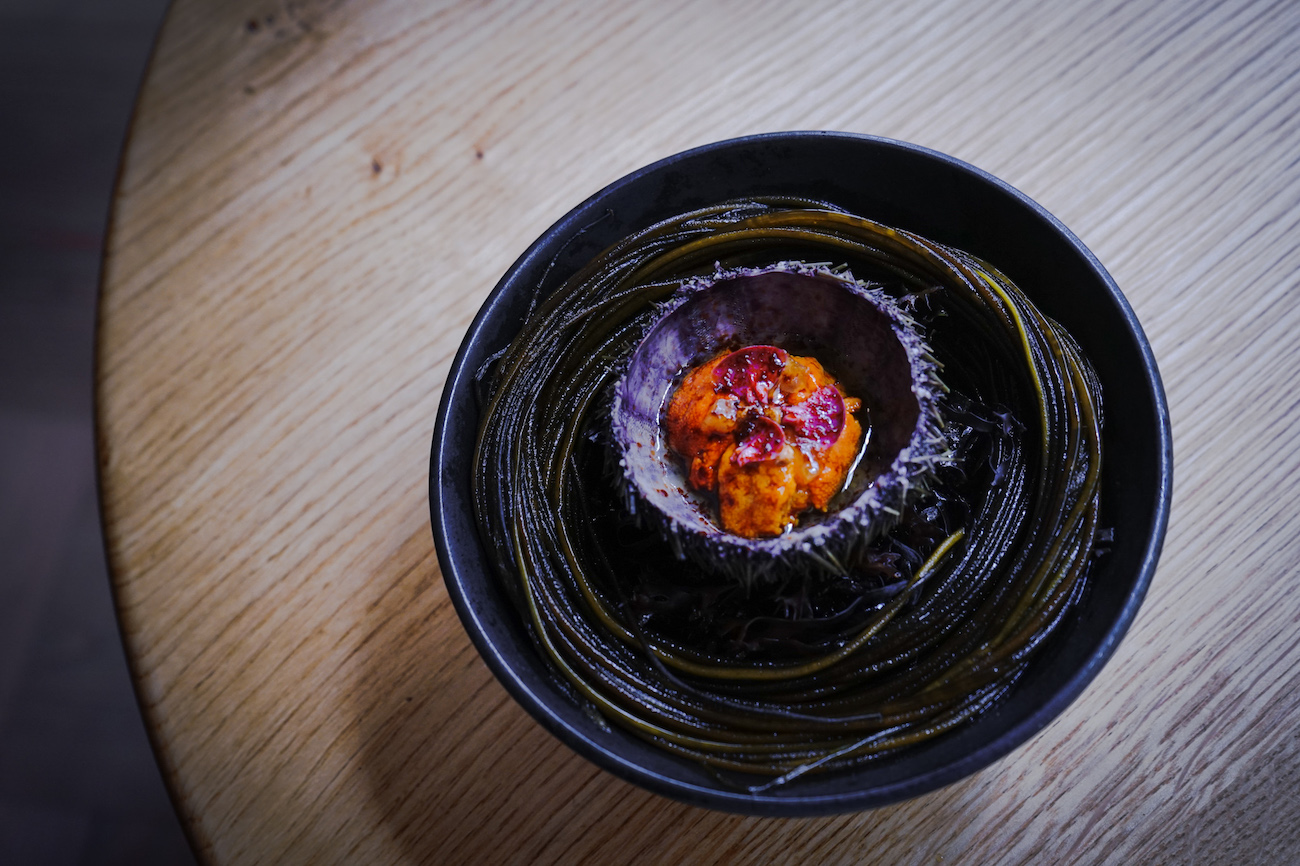
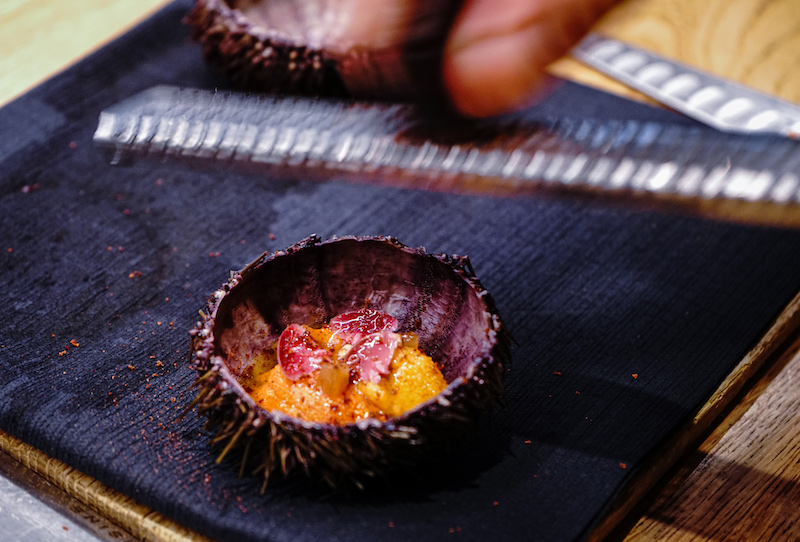
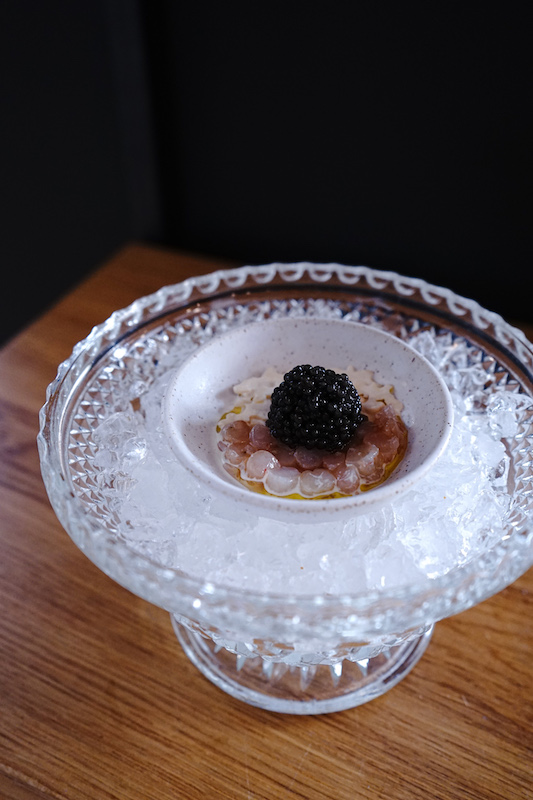
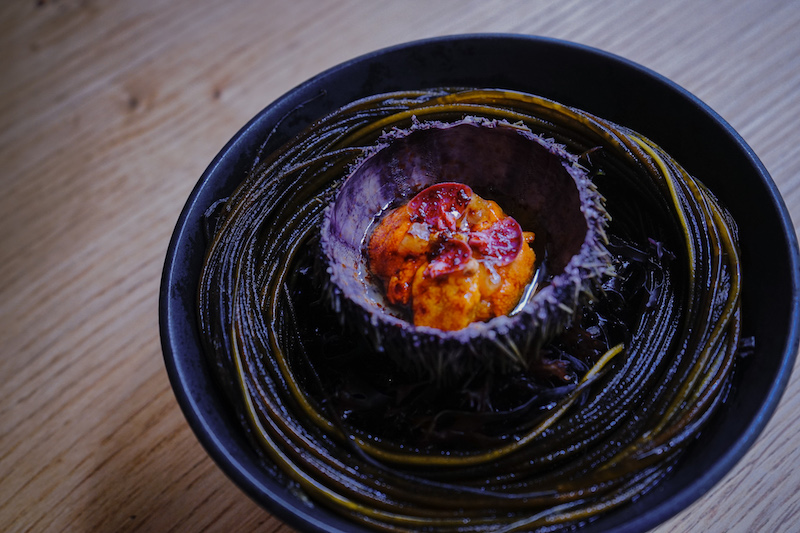
Of course, seafood is featured frequently on the menu, in line with the Nordic diet. The sea urchin with preserved pears topped with tiny sheets of Nobilis pine cones and mussel licorice maintains the perfect balance of sweet and umami flavors. A few examples of other dishes on the current menu include Danish sardines curated in kombu salt on spelt crackers with cream cheese. And Osietra caviar with just 2.2% salt, on top of shaved walnut leaves, sweet raw shrimp, rose oil and double cream infused with horseradish.
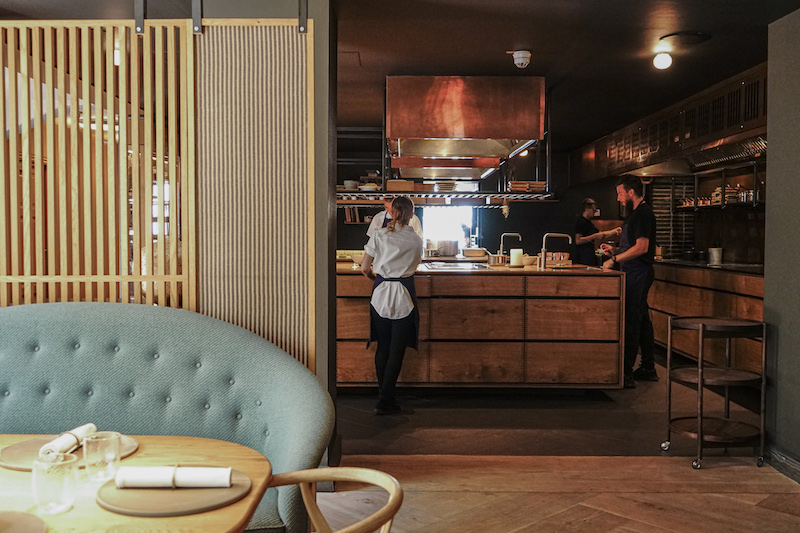
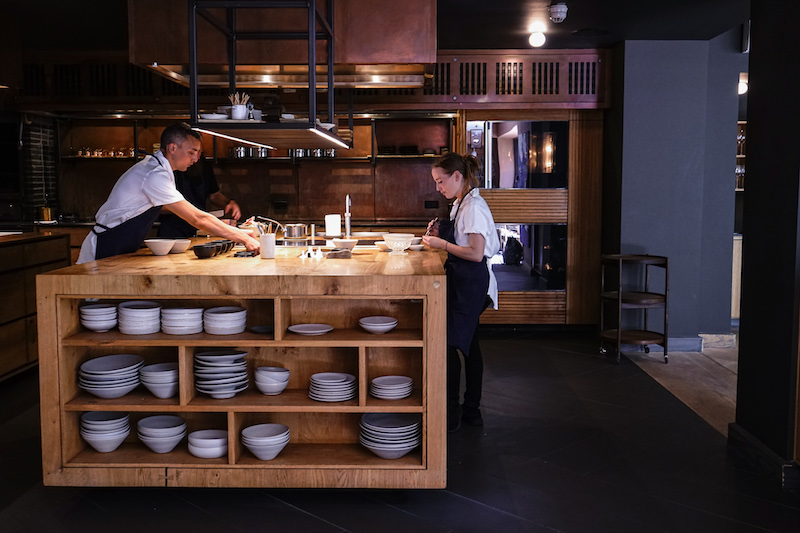
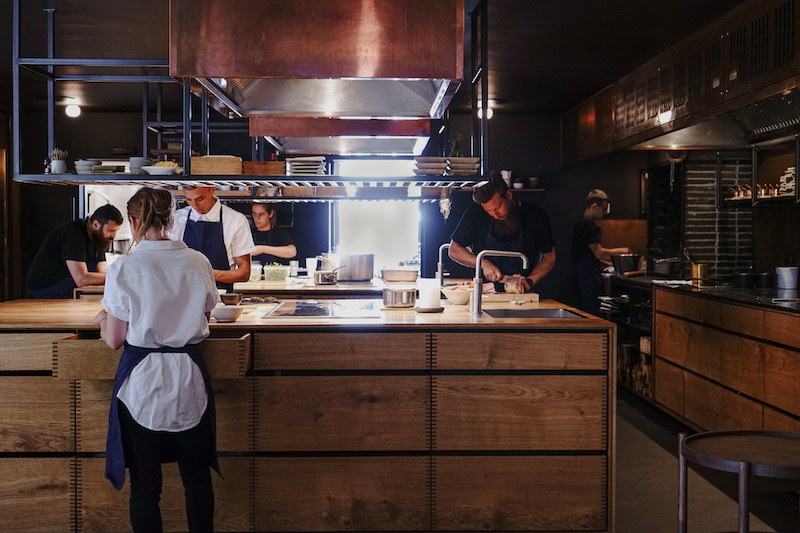
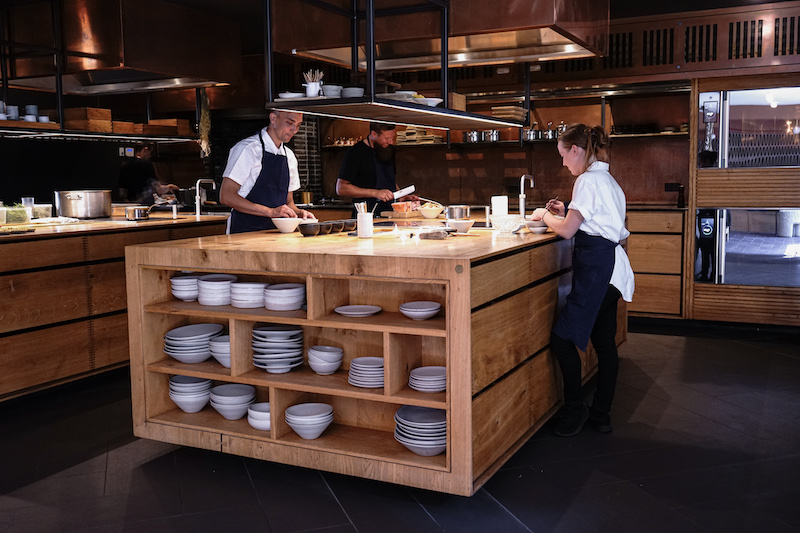
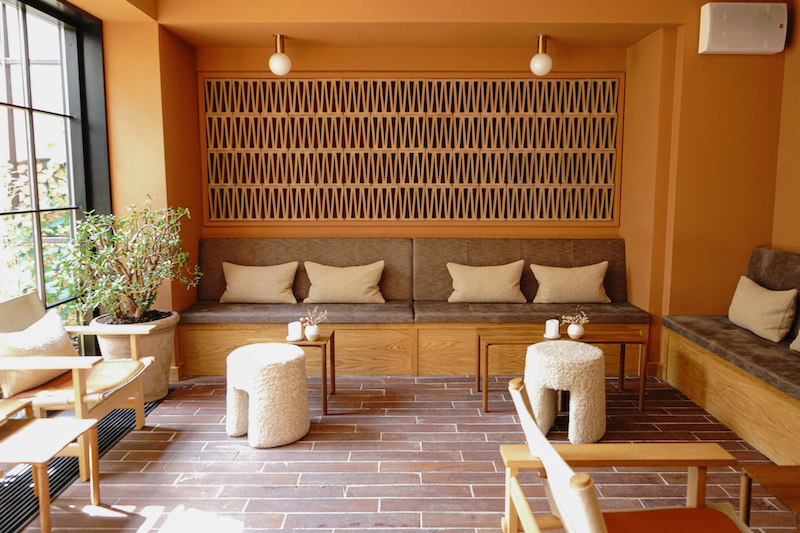
One of the most compelling and fun reasons to visit Kadeau is the open kitchen. And by open, we mean completely open, with no doors or windows between the kitchen and dining room. The chefs work around two large wooden islands impeccably designed by Garde Hvalsøe in full view from the dining room. Guests are invited to walk around and interact with the chefs as they prepare the food. The chefs enjoy getting to know the people who come in to eat their food. This close interaction adds another highly personal dimension to the dining experience at Kadeau.
Out of the many experimental restaurants in Copenhagen, Kadeau offers something entirely regional and intimate. With a passion for native food traditions and homegrown ingredients, Kadeau serves elevated Nordic flavors which diners won’t find anywhere else in the world. For more information, visit Kadeau.