“A lot of people think that tapas are ours, but when I went to Asia and noticed the way Chinese made and ate dim sum, and the way plates were served, it was just like our tapas.” Chef Albert Raurich.

Chef Albert Raurich grew up fishing in front of Salvador Dalí’s house. Born in Cadaqués, where Dalí was, Albert was a hyper active child who could never watch a film in its entirety; always moving, lacked concentration. When the chef of Dos Palillos turned 16, he decided not to study anymore. His mother saw an advertisement in the newspaper looking for culinary school students. When posed with the question of whether he wanted to be trained and become a chef someday, Albert said “yes” and his mother signed him up for classes the next day.
He loved pasta, so became an expert in Italian cuisine and climbed up the ladder in three Italian kitchens. He simply adored Italian cooking and wanted to develop into an expert in the specialty. “Afterwards, I wanted to cook fish, so I went to a special place to do that. Whatever I wanted to improve and refine on, I went to a specific place to do so. Until I arrived in elBuilli one day and stayed there for a very long time.” A long time turned into numerous years of training in one of the best restaurants in the world in Roses, Catalonia, Spain. His culinary path has always been based on his curiosity of what he had yet to refine.

Albert is a character, filled with gregarious energy, full of laughs. At elBuilli, he was trained by Ferran Adria, one of the most renowned yet controversial chefs in the world. By Ferran’s side, he learned a lesson that has carried him throughout the success of his career: instilling the will to keep learning consistently with new techniques, specialities and ways of cooking. “A unique passion for food was what I learned from Ferran,” he charismatically explained, “And being honest with your clients. Nowadays, its sad that there are numerous restaurants in Barcelona attempting to fool the wallets of clients. I want people to leave my restaurants, when the wine calms down the next and they still feel good about how much they’ve spent on the food the night before.”
Another great moral he received from Ferran was: popularizing high-end cuisine. 40 years ago, fine-dining was only accessible to the elites, those who had the money and power to experience cuisine in restaurants with white table clothes. “It wasn’t about people who had a great pallet, or who knew how to eat, or understand how great the quality of the food was.” Albert notes, “elBuilli was the best restaurant in the world, and it was the cheapest in the Michelin category. Ferran wanted the high-end food experience to be shared with everybody, not just people who have the money.” Albert comprehends that, the problem wasn’t getting people to save $250 to spend at a restaurant, the problem was getting a table there.

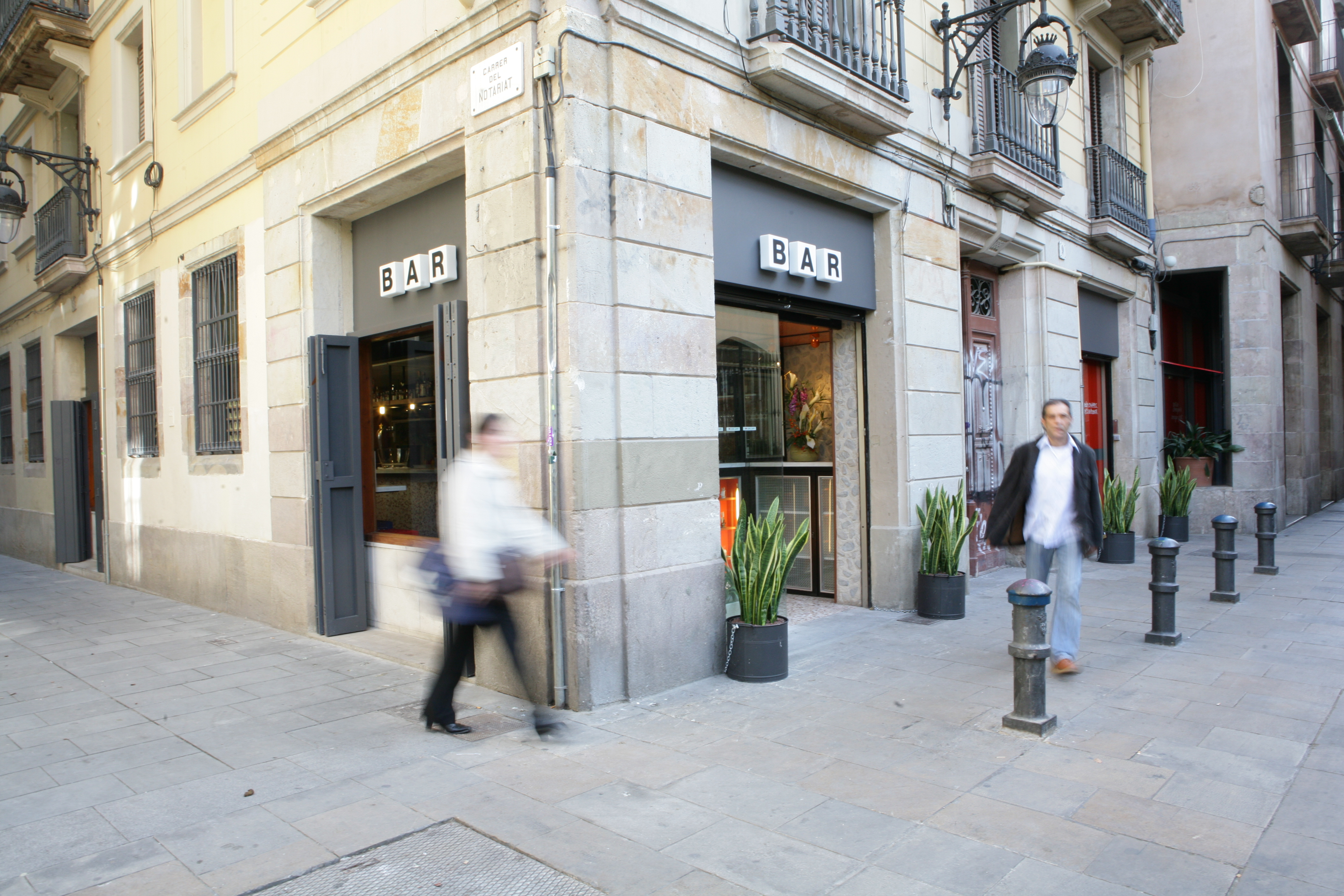
In recent years, when Albert left elBulli to open his own restaurant chain, Dos Palillos, Ferran wanted Albert to hang an exclusive elBulli white jacket outside of Dos Pallilos’ display windows. True to his humbleness, Albert refused to flaunt his decorative past. The jacket was quite special, given to him and signed by every chef who worked with him side-by-side at elBulli on the day he left the legendary restaurant. As a surprise, Ferran secretly told the architect to permanently exhibit Albert’s white jacket in the exterior glass of the restaurant. To this day, it adorns as a shiny embellishment in the busy Barcelona alley where Dos Palillos is located.
Today, Dos Palillos (literally means: two sticks) has two locations, in Barcelona and Berlin. It’s Albert’s latest creation, combining the philosophy of Spanish tapas with the doctrine of Asian gastronomy. It was a tempting project for him, since he had never experimented with Asian food. Regardless of the risks involved, Albert’s quest for learning urged him to open a restaurant that is utterly well-done. “I didn’t want to open just another tapas bar, we didn’t want to be just another restaurant.” He implies, “Before being creative with gastronomy that we’re not familiar with, we studied it, understood how we would combine two completely different cuisines and truly learned it.” He knew that if he didn’t do so, it would be disrespectful to the art of Asian cooking. Nonetheless, having a wife who is Japanese also helps. When he visited his wife’s family, he would enthusiastically attain the background of Japanese cuisine, Asian home-cooked meals and her family’s way of cooking.

Besides a restless expedition of learning, an uncommon trait to Albert’s success is the perception that, cuisines across multiple cultures can often be viewed as different, yet linked with hefty similarity. “A lot of people think that tapas are ours, but when I went to Asia and noticed the way Chinese made and ate dim sum, and the way plates were served, it was just like our tapas.” Albert recalls, “So really, the Spanish didn’t truly invent tapas, other cultures also ate the same way.” Albert’s realization that such cuisines are: same but different, allows him to create dishes listed on Dos Palillos’ menu in a complimentary manner. In both China and Japan, he discovered menus that were 400 years old. “That’s the concept, we have the same thing, we just call it ‘tapas.’ But in actuality, it’s been around before we thought we invented it. They just call it something else.”

To keep going, he remains inquisitive. Always refining his craft, always searching for specialities he has yet to distill. To keep going, he rides on a prolonged quest of learning. And this is what he defines as, happiness.
Heading to Barcelona? Book your reservation at Dos Palillos.