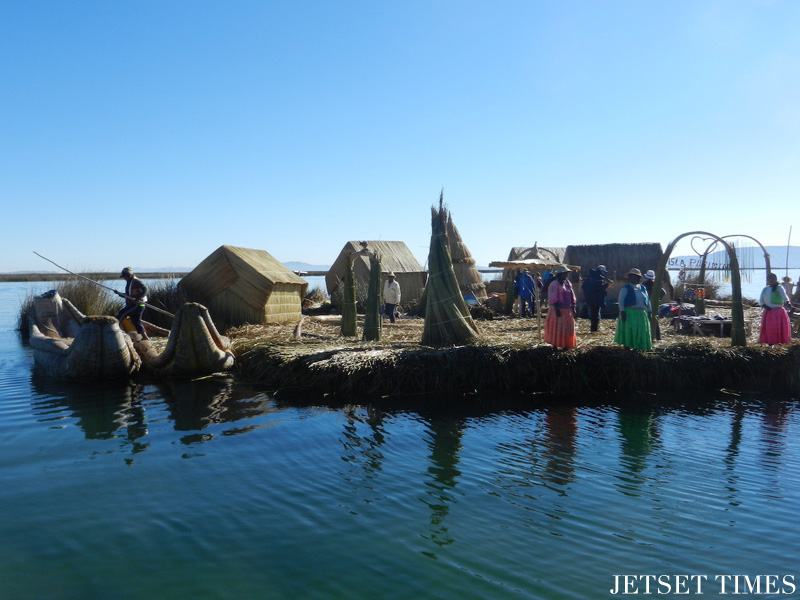
Many islands are large enough to have several families living on them at one time. The largest floating island measures 30 meters wide (99 feet) and accommodates 10 families. PHOTO Jerry Leon
To travelers to Lake Titicaca, a stop by the floating islands are an absolute must-see. Made from totora reeds – a versatile material used for construction, transport and even sustenance – the islands were marvels of engineering for their time, and remain a top tourist destination today.
A two-hour boat ride from the port city of Puno, located on the Peruvian side of the lake, there are 70 man-made islands in Lake Titicaca. The origin of the floating islands date back several hundred years to the Uros, a pre-Incan people who originally constructed the islands for safety and defensive purposes against attacks from rival groups. Today, a few thousand descendants of the Uros survive, with many still living on the islands.
Last year, I had the opportunity to visit one of the islands via a local tour company. Flip through the image gallery to get an up-close look at life on the islands and the families that call it home (plus some adorable kittens!).
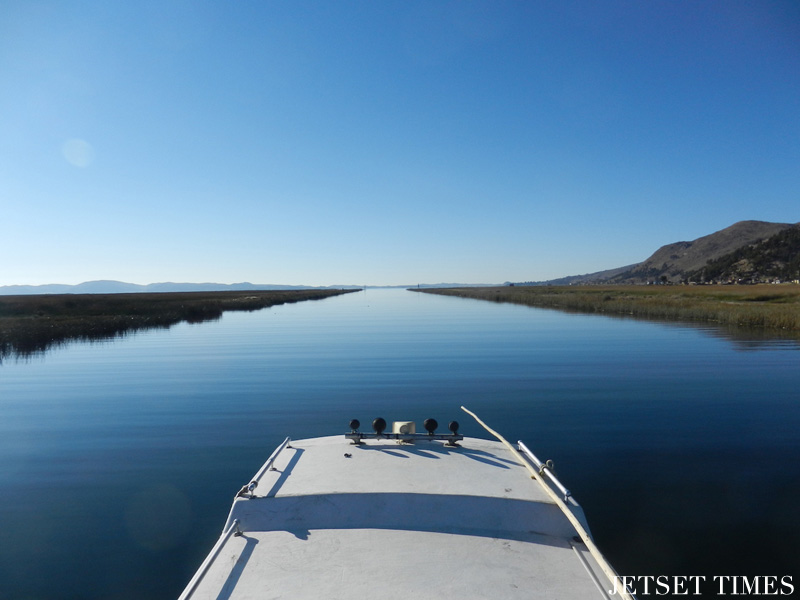
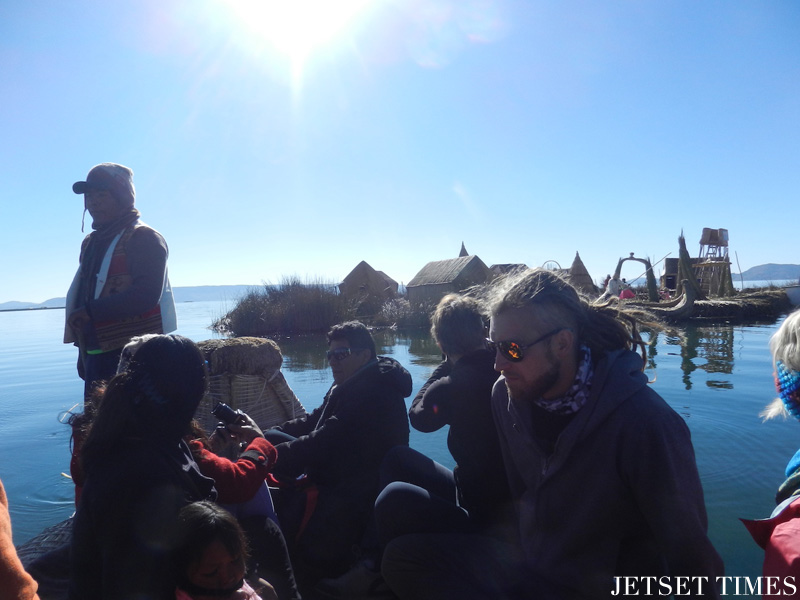
A lovely day for a boat ride on Lake Titicaca, heading towards the floating islands.
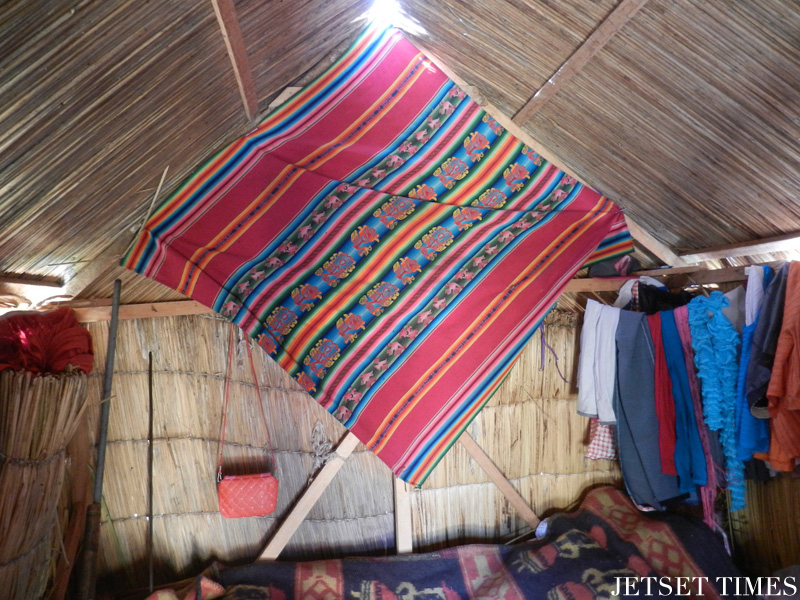
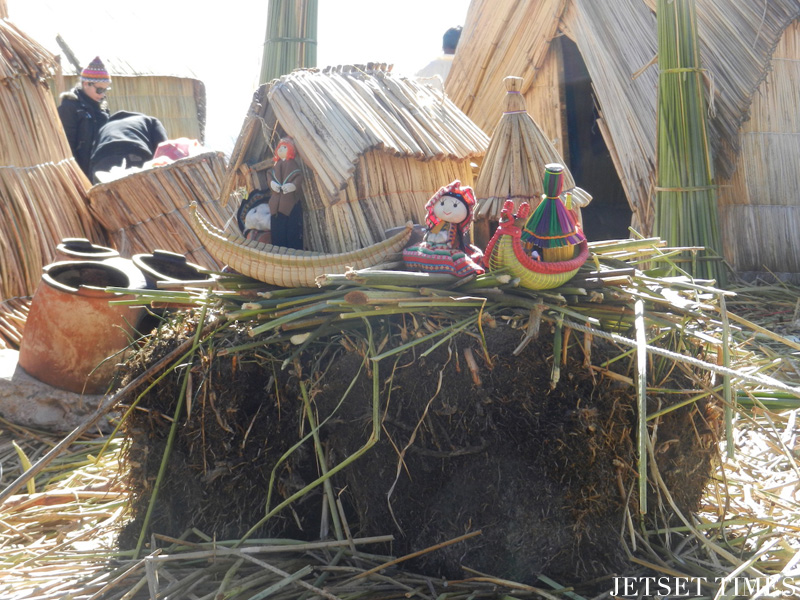
A family of four shares this modest home, made entirely of totora reeds. With the exception of a few items and some articles of clothing, almost everything you see is handmade by this particular Uros family.
Can you see the puma hunting the rabbit? The name Titicaca derives from the local “Titi Khar’ka,” meaning Rock of the Puma, which refers to the catlike shape of the lake when viewed upside down.
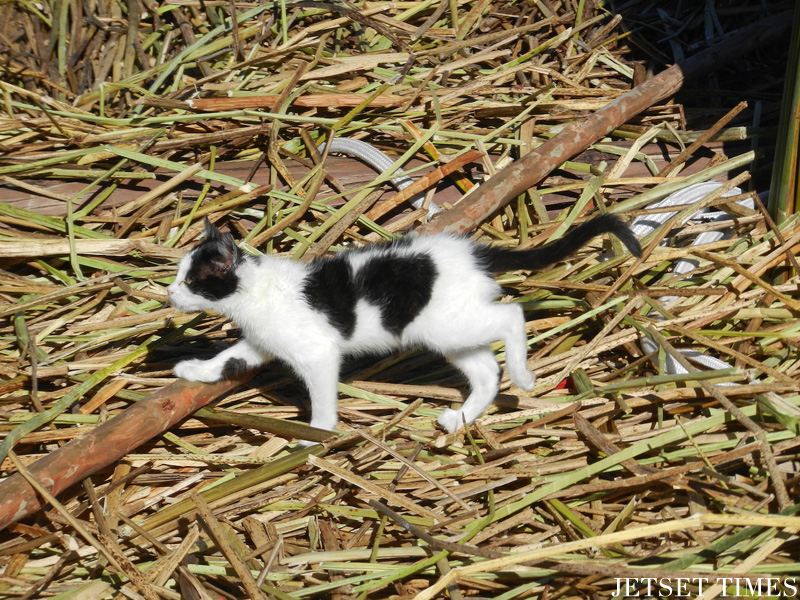
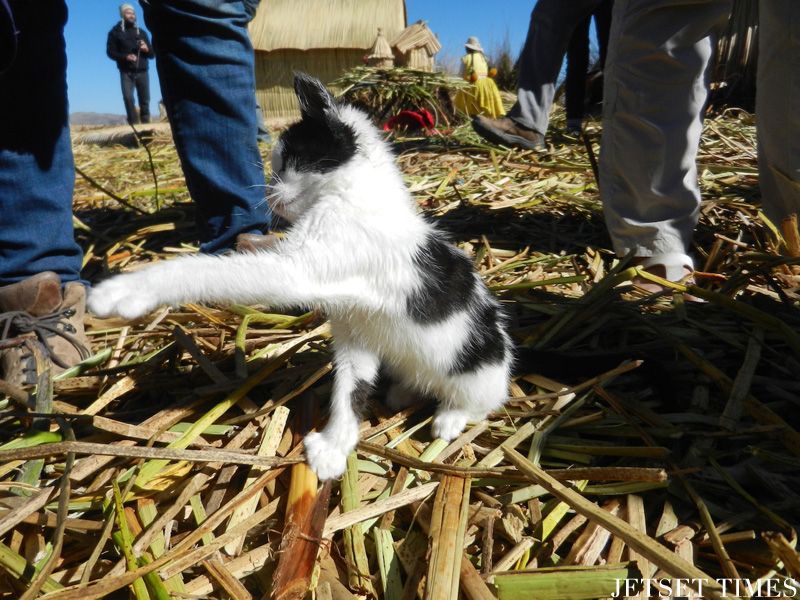
Don’t think these cute and cuddly animals are simply for show; cats play an important role on the island by catching and controlling the rat population.
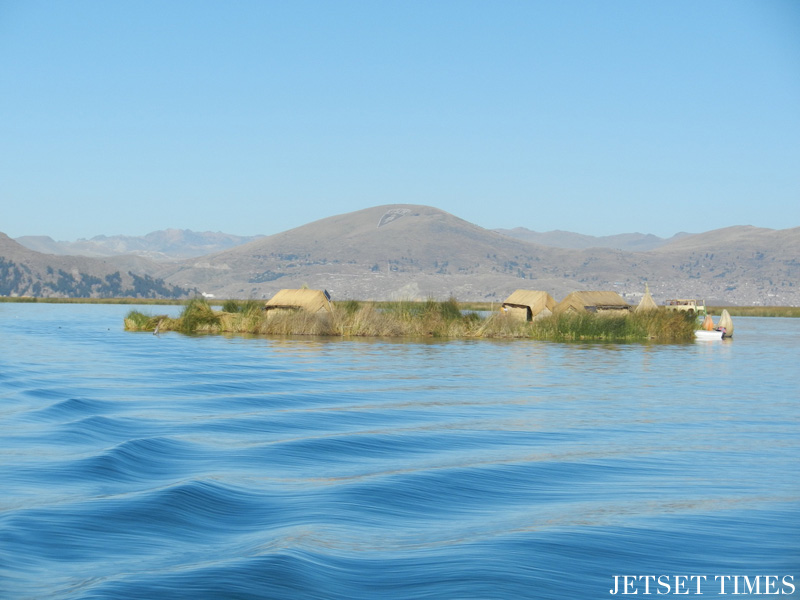
Many islands are large enough to have several families living on them at one time. The largest floating island measures 30 meters wide (99 feet) and accomodates 10 families.
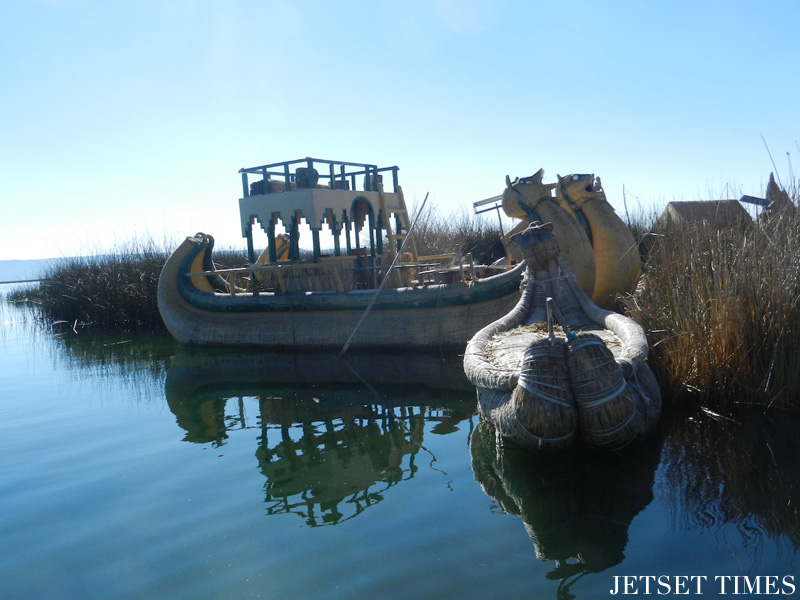
It’s amazing to think that these boats are made entirely of reeds. The large boat in the back is used primarily for ceremonial purposes, including the popular re-enactment of the Manco Capac and Mama Ocllo legend story.
This is one of 70 floating reed islands on Lake Titicaca. Oh, and the water is even more beautiful and pristine in person; but think twice before taking a dip, as water temperatures can be as low as 10-14 degrees Celsius (50-57 degrees Fahrenheit).
These handmade blankets serve as an important source of income for the Uros, who rely on tourists, and the tourism industry, to supplement their living.
Life for these toddlers is simple and carefree. Many islands offer early school programs, while older children and university students head the mainland for university, more than likely in nearby Puno.
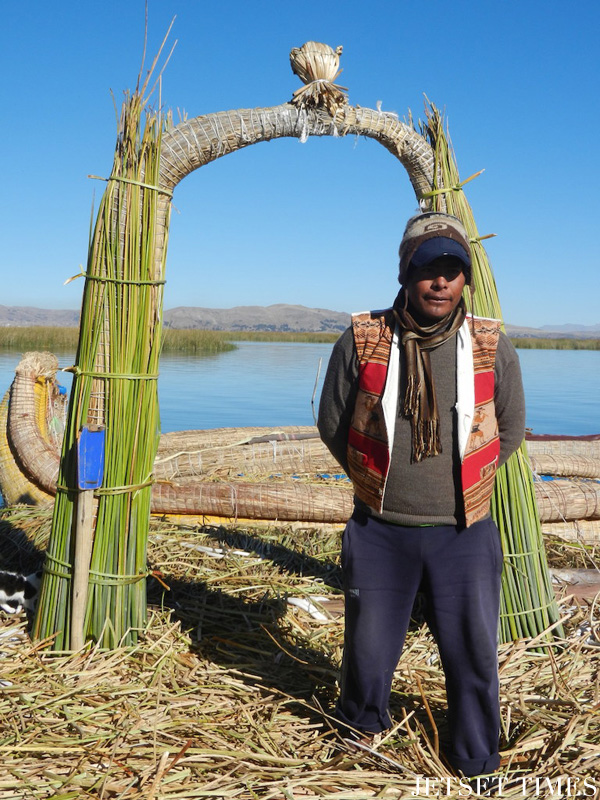
Our gondolier stands proud in front of his reed boat. But this isn’t just any reed boat, as he often remarked, this is the “Mercedes Benz” of reed boats.
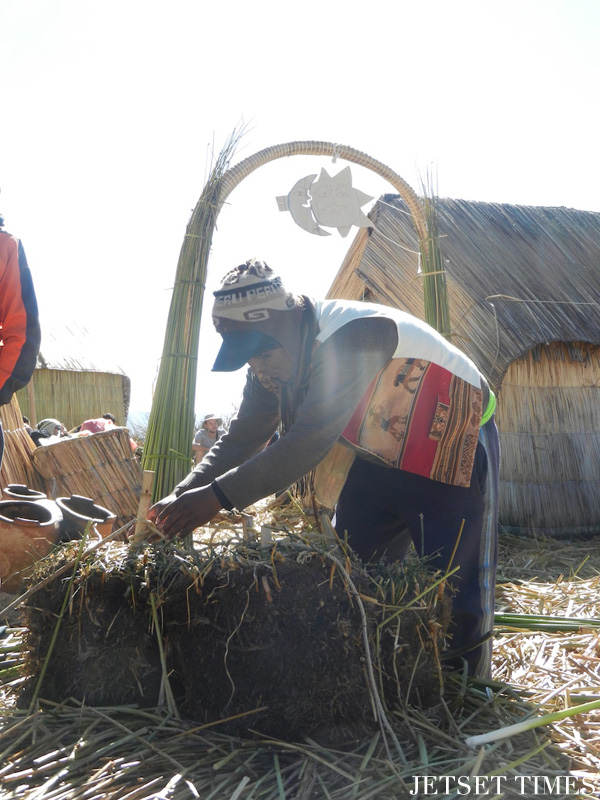
A local man demonstrates how the totora reeds are used to construct the islands. Blocks of marsh reed form the foundation of the island and dense layers of totora reeds placed on top, which provide a spongy, yet cushy floor. When the top layer rots or becomes too brittle, a new layer of reeds are pulled from the lake and stacked atop the old layer; this continuous process requires almost daily routine maintenance by the Uros.
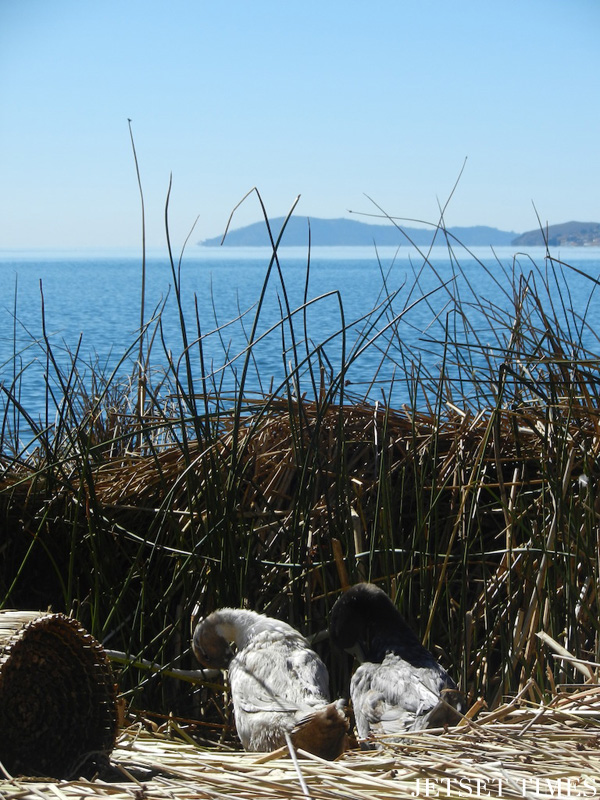
Founded in 1978, the National Titicaca Reserve protects and preserves 37,000 hectares of marshland and islands. Over 60 species of native bird, 18 native amphibian species and four families of fish are federally protected by the reserve.
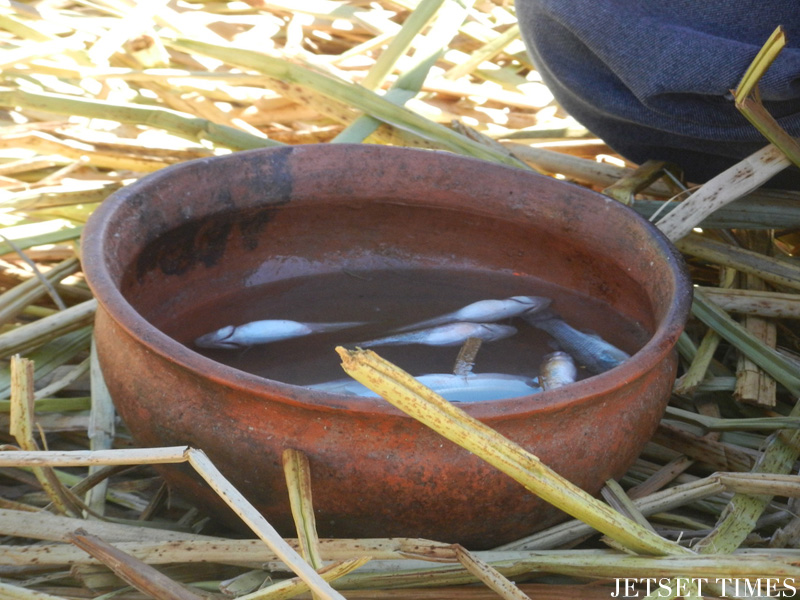
The Uros depend on cormorants, birds usually found tethered to a secure location, to catch fish for them, like these in this bowl.
“I remember being yay high when I caught my first mouse; just over yonder, in fact. Greatest day of my life.”
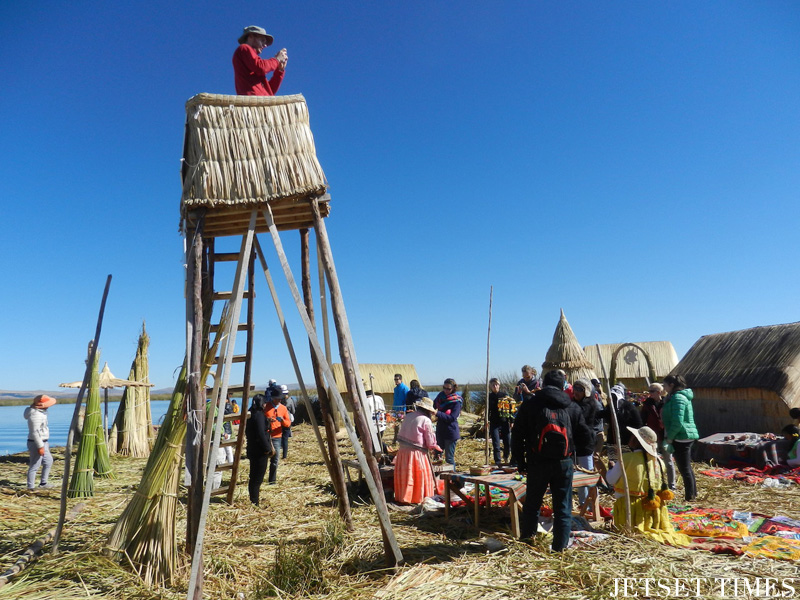
More than 500 years ago, the Uros used watchtowers similar to these to warn their people when warring tribes, like the Incas, were approaching. Today, it seems scoping out the scene for the latest Insta post is its primary purpose now.
For a few extra dollars, you take a ride around the lake in a reed boat! I highly recommend it, especially since the money goes directly to the residents of the island. This boat could fit upwards of 20 people, and it was actually a very pleasant ride.
An important source of income for the Uros derives from the tourism industry and merchandise sales it generates from visitors.
This little guy had us all in good spirits with his sharp singing voice and quick-witted remarks.
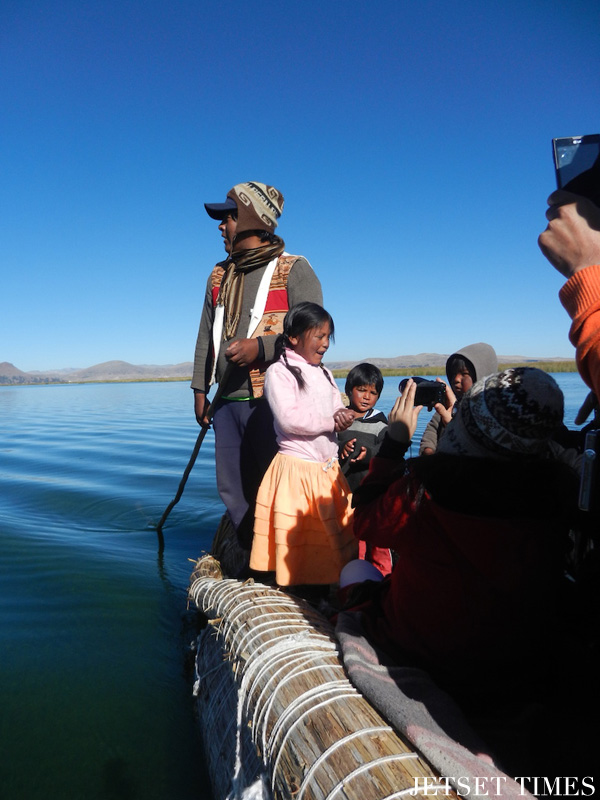
A local man steers the boat, while his children sing a song in their native Aymara language.
Jerry's favorite country to travel to is Spain. When he's on the road, he keeps it real simple with a pen and a pad. His travel style is spontaneous, easygoing, and always in search of a great adventure.