Promenade through the vivacious piazzas of Italy where live music is heard, fresh produce is sold, and locals are seen at bars, cafés, or churches.
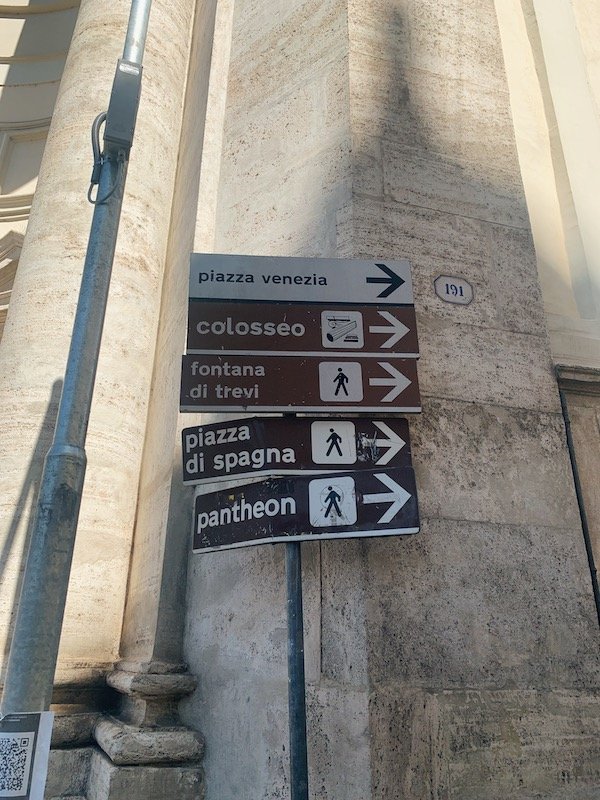 Santa Maria dei Miracoli Sign. Photo: Precious Vue
Italian piazzas are the center of public life, serving the city’s political center, religious base, and economic wealth since ancient times. Many of the local squares are embellished with alluring statues, fountains, and occasionally Egyptian obelisks. There is no better way to live as the Romans did than strolling through the city’s center of vocation.
Piazza del Popolo
Piazza del Popolo, 00187 Roma RM, Italy
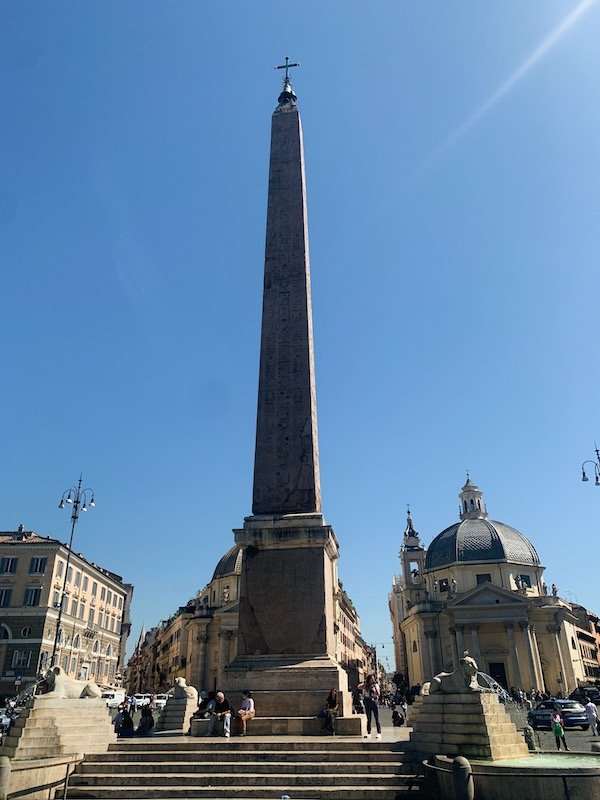 Piazza del Popolo. Photo: Precious Vue
Built in 1,300 B.C. the Piazza del Popolo (The People’s Square) is one of Rome’s main piazzas. For centuries the Porta del Popolo (Gates to the People’s Square) served as the ceremonial entryway to Rome. The plaza gained visitors in seek of the basilica of Santa Maria del Popolo and the twin churches, Chiesa di Santa Maria and Santa Maria dei Miracoli. They can all be overlooked from the Villa Borghese. In the square’s center stands a stained-white marble fountain and an ancient Egyptian obelisk. There are always people sitting on the steps of the fountains, lounging, and enjoying time with friends. Off of the downtown area, three of the most important street part of the Piazza del Popolo: Via del Babunio on the left, Via di Ripettaand on the right, and down the center is the Via del Corso. They lead to some of Rome’s iconic attractions. such as: the Pantheon, the Scalinata di Trinita dei Monti, and the Fontana di Trevi.
Piazza di Spagna
Piazza di Spagna, 00187 Roma RM, Italy
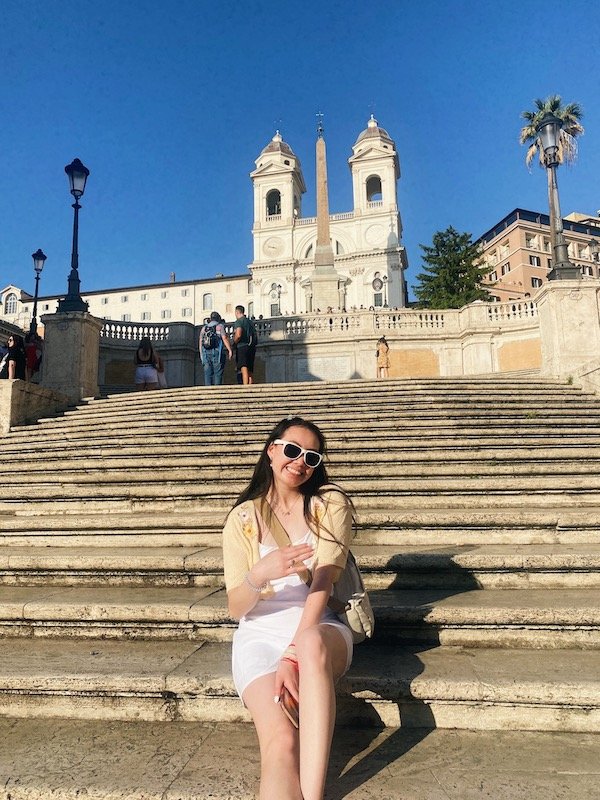 Piazza di Spagna. Photo: Precious Vue
Following the way of Via del Babunio, encounter the Piazza di Spagna (Square of Spain.) The name, Scalinata di Trinita dei Monti, comes from the 17th century for the unification of Bourbon Spanish Embassy and Trinita dei Monti Church. The Spanish Steps were built at the beginning of the 18th century, connecting the church to the plaza. At the top of the steps, overlooking the streets of the plaza and from afar, see the Piazza del Popolo. Sitting below the 135 steps is the Fontana Della Barccia (Fountain of the ugly boat) designed by Pietro Bernini. This center is filled with visitors amongst the Spanish Steps.
Piazza Navona
Piazza Navona, 00186 Roma RM, Italy
 Photo by Gabriella Clare Marino on Unsplash
The next public square is the Piazza Navona, where the Stadium of Domitian (Circus Agonalis) once stood in 86 AD. Piazza Navona is most known for its three beautiful fountains: Fontana dei Quattro Fiumi, Fontana del Moro, and Fontana del Nettuno, designed during the papacy of Gregory XIII. Travelers and locals tend to sit near the fountains to watch performances by street artists, dancers, and magicians.
Piazza Della Rotonda
Piazza della Rotonda, 00186 Roma RM, Italy
 Photo by Gabriella Clare Marino on Unsplash
Located right outside the Pantheon rest the Piazza Della Rotonda, named after the church of Santa Maria Rotonda, formally known as the Pantheon. In the 19th century, the square was most famous as a bird market. In the center, Fontana del Pantheon was built in 1575. The Egyptian Obelisk was not added to the fountain until 1711 under Pope Clement XI. Now Piazza Della Rotonda is a hotspot for visitors to shop for products, like: fruits, vegetables, flowers, and cakes.
Piazza San Pietro
Piazza San Pietro, 00120 Città del Vaticano, Vatican City
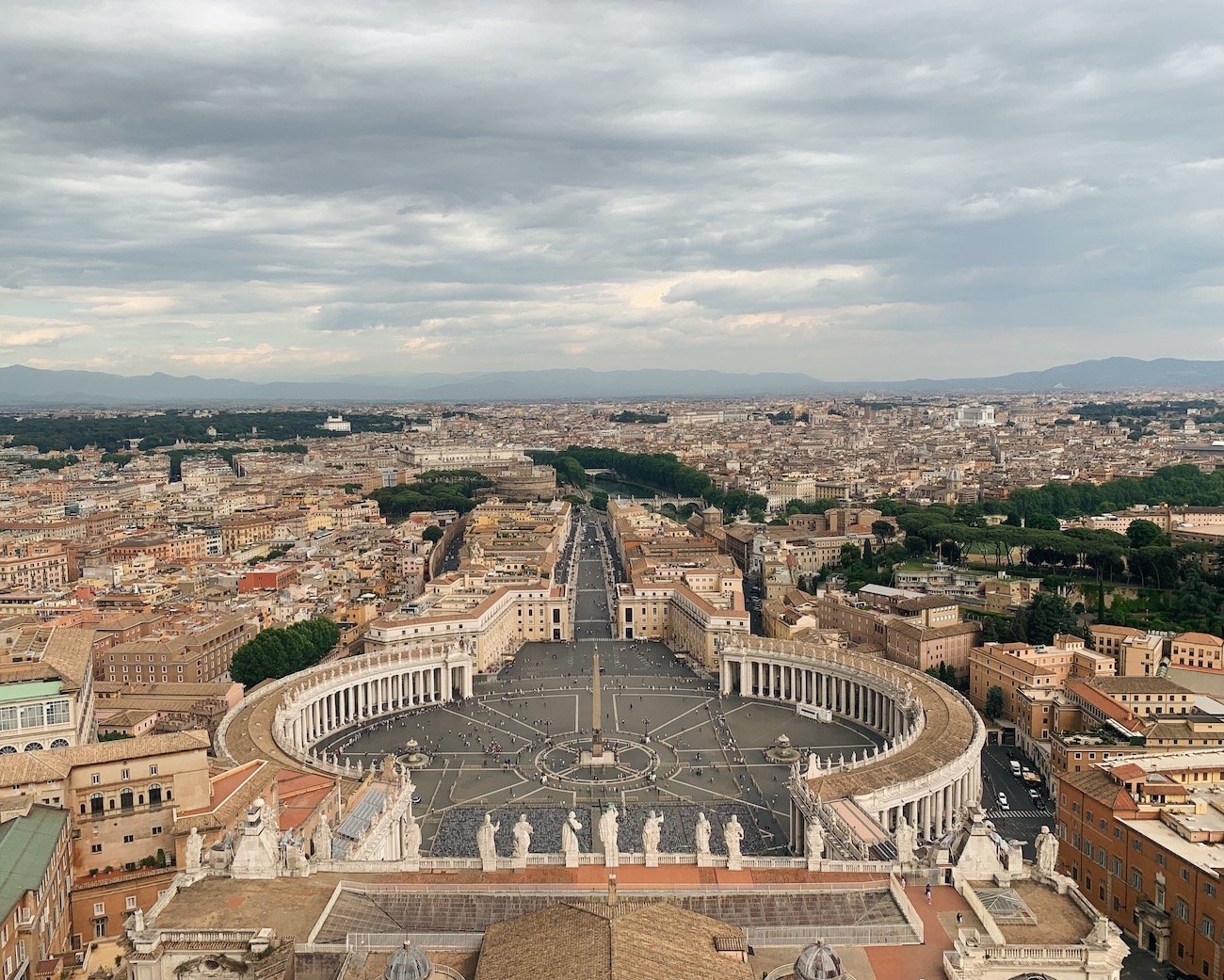 Piazza San Pietro. Photo: Precious Vue
Established on the grounds of the first crucified Pope of the Catholic church. Piazza San Pietro welcomes travelers into Christianity’s embrace. The Vatican square is surrounded by vast semi-circular Tuscan colonnades. Just beyond it rests Saint Peter’s Basilica, built-in 67 AD. Piazza San Pietro is Italy’s most counter-reformed city center with its monumental dimensions and abstract symmetric designs, all created by the one and only, Lorenzo Bernini.