
Bordering China and India, Bhutan is a Buddhist Kingdom where the royal family has always been more keen on the nation’s happiness rather than its economy.
 From Tina Turner to Orlando Bloom, being Buddhist has become a trend, if not a status symbol, in the last few years. Infuse that with traveling and you’ve got soul-searching explorers flocking to India, Nepal and the latest spiritual destination in-vogue: Bhutan.
Bordering China and India, Bhutan is a Buddhist Kingdom where the royal family has always been more keen on the nation’s happiness rather than its economy. Gross National Happiness – as it’s often referred to in Bhutan – means traffic lights and fast food restaurants are ousted by temples, monasteries and local culture.
Since Buddhism is the state religion in Bhutan and Buddhists comprise two-thirds to three-quarters of its population, meditating yogis have been traveling to Bhutan for retreat purposes. If you’re wondering why Bhutan wins in delivering peace and enlightenment, here are just a few reasons. Ready to #GetZen?

1. Deep breaths surrounded by untouched landscape, reserved nature.
As the modern world’s model for proactive conservation initiatives, Bhutan has maintained at least 60% of the land area under forest cover, to designate more than 40% of its territory as national parks, reserves. Surrounded by nature and gorgeous landscape which include the Himalayas, it’s the perfect location for daily hour-long outdoor meditation during your trip.

2. A land blessed by many yogis and rinpoches.
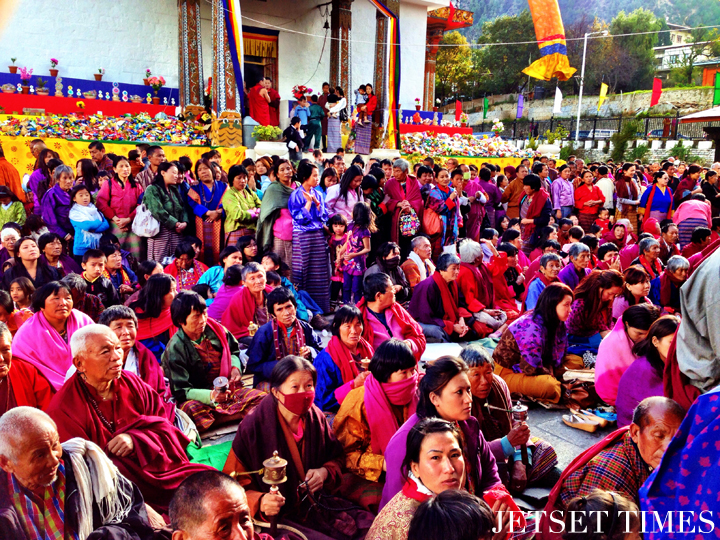
A rinpoche refers to “the precious one.” In Buddhism, it’s a way of showing respect for those recognized as reincarnated, older, respected, notable, or a renowned Lama. In Bhutan, travelers will encounter Buddhist festivals where rinpoches are present to bless festivalgoers. Because there are lands and temples blessed by celebrated yogis, they make fantastic opportunities to learn about Buddhist teachings. Thimphu’s Buddhist University, for example, offers a great chance for travelers to sightsee and engage in conversations with lamas teaching at the school.

3. De-stress then reach clarity.
The minute travelers step off of the plane in Paro, it’s already clear that local Bhutanese exude a sense of contentment that is hardly seen anywhere in the world. The kind of contentment is something that we’re all searching for within ourselves. It seems as though Bhutanese know their connection to the universe and don’t need to travel far to find it. Observing them, their local culture is in a form of de-stress in itself. On the trip, getting up every morning to mediate, then spend the day learning about local life somehow allows a different perspective to shine through. Aka: clarity. Ah…what a concept!

4. World’s first 100% organic nation.
So much about practicing yoga and mediating is understanding the essence of cleansing and reaching purity. Bhutan’s political parties have united to eradicate chemical fertilizers and pesticides as part of its Gross National Happiness program, making Bhutan the world’s first 100% organic nation. If you believe in “you are what you eat,” then consuming organically is also letting your authentic self shine.

5. Mindfulness leads to gratefulness.
If you’re a students leaving a meditation retreat, your biggest question might just be: how to go about the mindful cultivation of gratitude. Reminder: a trip to Bhutan is not about escaping the difficulties we all go through life. But surrounded by lamas strolling on the streets and zenful landscape is a good approach to practice mindfulness of gratitude since travelers are being connected to life and realizing that there’s a largest context to your own personal journey. Being in Bhutan is being temporarily liberated from the stress and worries of life’s drama. Cultivating thankfulness comes from the feeling of being blessed – a refined appreciation for the nature of life. Isn’t this such a beautiful way to look at the world?

